Project Overview
J W Hinchliffe Tanks completed a major tank farm decommissioning project at an NHS hospital in the Midlands.
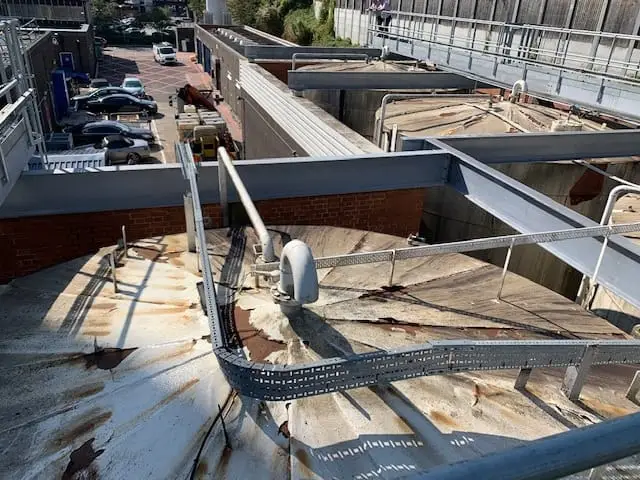
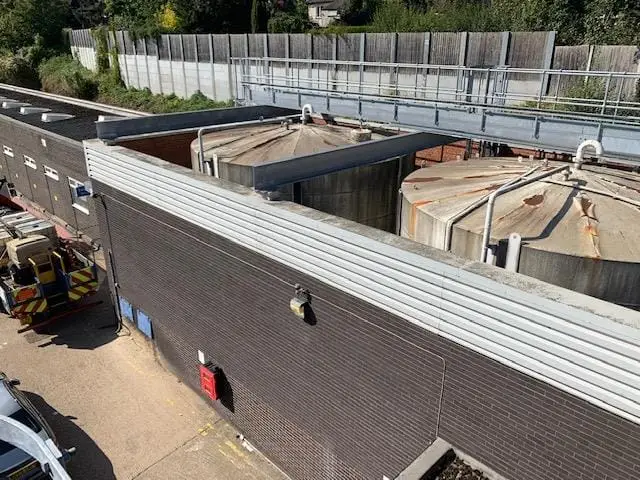
The tank farm contained four 160,000-litre fuel tanks within a busy construction environment. Numerous other contractors were also working on the site, so careful planning and safe access were essential.
The overall project involved removing approximately 200,000 litres of water from the bund, emptying and cleaning each tank, dismantling the gantry for reuse, and cutting the tanks into sections for removal.
The client initially planned to use mechanical shears. However, JWH did not believe this was the safest method because of the proximity of other contractors and site activity.
Instead, JWH proposed an alternative decommissioning method. The site project team and safety officers approved the approach, and JWH was instructed to proceed.
Project at a Glance
Sector: Healthcare
Location: Midlands
Client site: NHS hospital
Tanks: Four
Tank capacity: 160,000 litres each
Water removed from bund: Approximately 200,000 litres
Main challenges: Busy construction site, restricted access, large tank volumes, confined-space cleaning and heavy lifting
Services provided:
- safe-system planning
- removal of water from the bund
- oil/water separation
- tank emptying
- internal tank cleaning
- confined-space entry
- atmospheric monitoring
- gas-free certification
- gantry dismantling
- tank cutting and removal
- crane operations
- waste handling
- project documentation and handover
Choosing a Safer Decommissioning Method
JWH was initially invited to quote for the project using mechanical shears to dismantle the tanks.
After reviewing the site conditions, the team declined to proceed on that basis.
The tank farm sat in the middle of a busy project with several other contractors working nearby. Therefore, JWH believed that mechanical shearing would introduce unnecessary risk.
Following a meeting with the site team, JWH presented an alternative methodology to the project managers and safety officers.
The proposed method used controlled access, internal tank cleaning, gas-free preparation, external hot cutting and crane lifting.
The site team approved the approach and awarded the project to JWH.
Creating Safe Access to the Tank Farm
Access into the tank farm was limited.
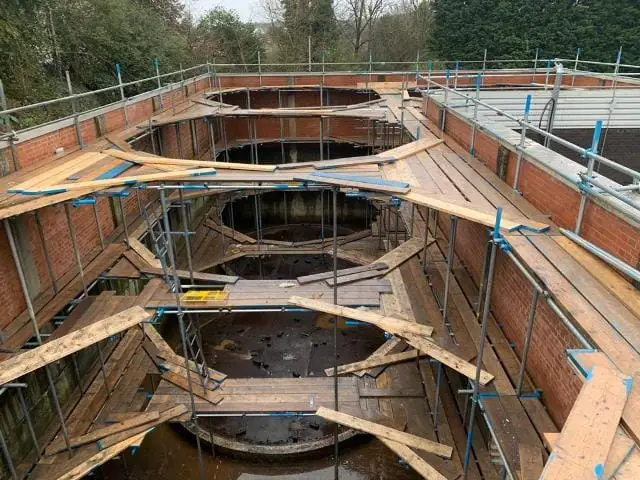
Before JWH could begin the main decommissioning work, the principal contractor created suitable access points through the bund in several locations.
This allowed personnel to enter and leave the work area more safely.
The team could then begin removing the large volume of water that had accumulated inside the bund.
Removing Water from the Bund
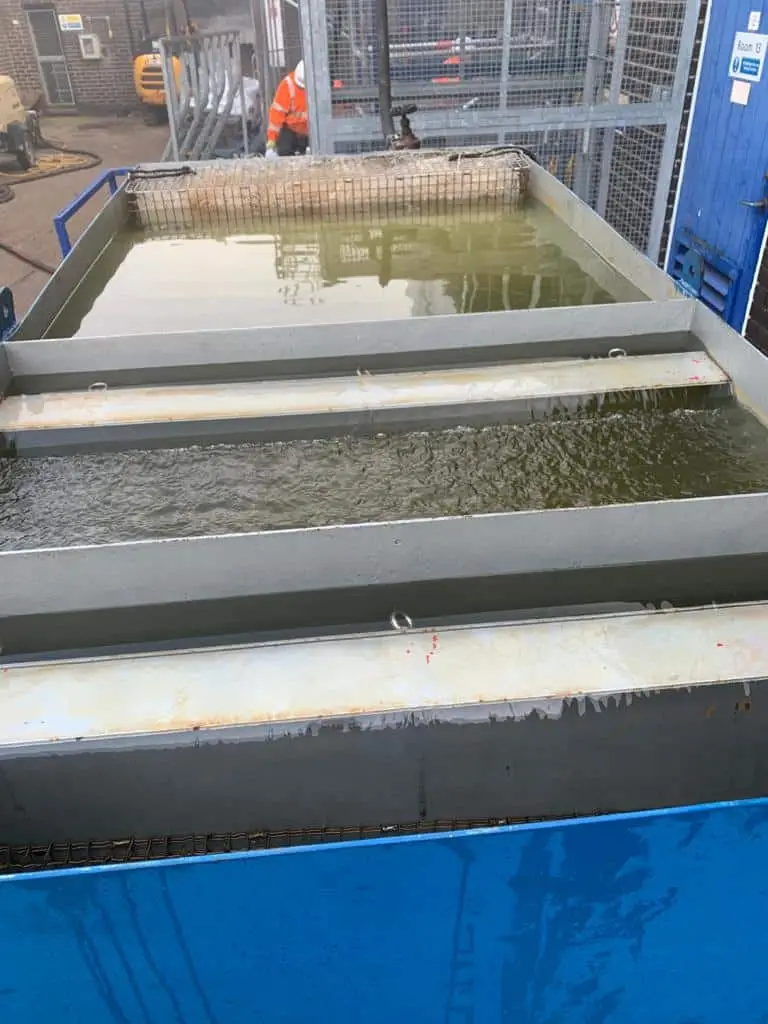
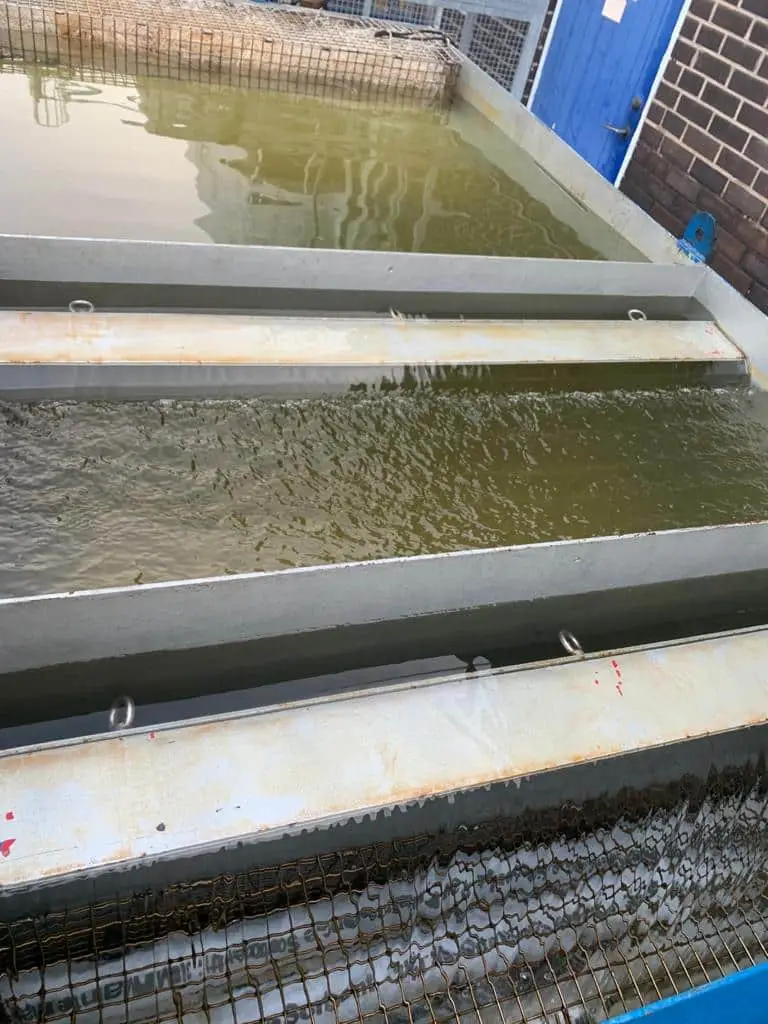
The bund contained approximately 200,000 litres of water.
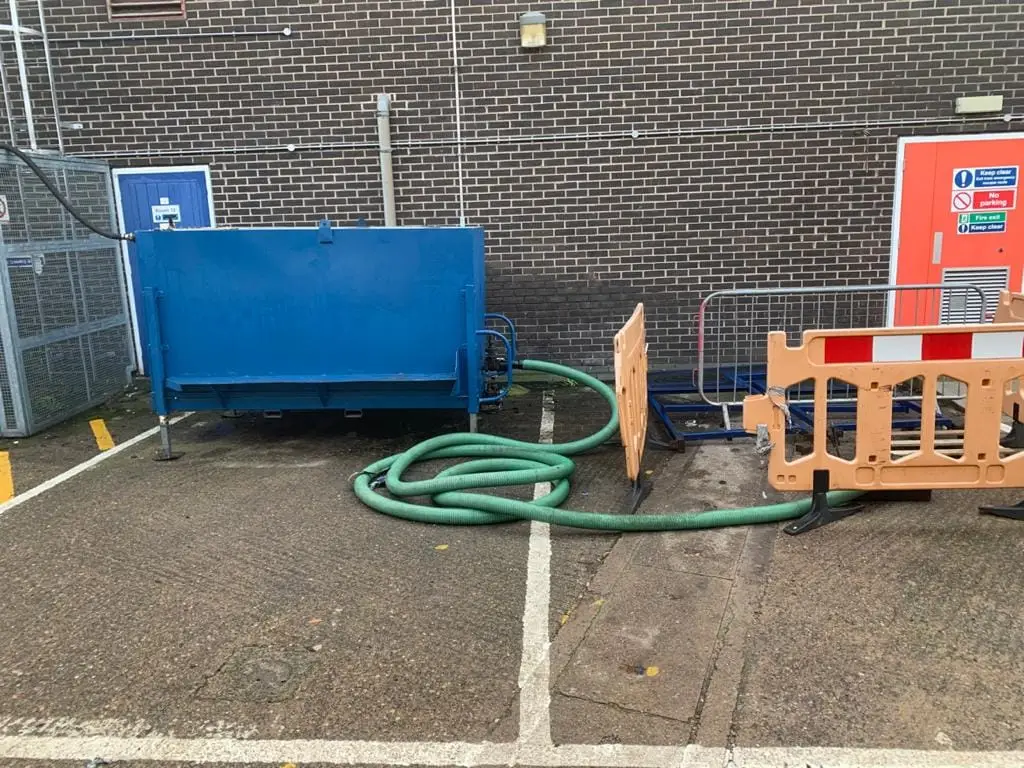
JWH pumped this water through its own oil/water separator before discharge.
The work took place under a permit issued by the relevant local water authority. This allowed the team to control the discharge while reducing the risk of oil contamination entering the drainage system.
For readers unfamiliar with the term, a bund is a secondary containment area designed to retain fuel or other liquids if a tank leaks or fails.
For more information on oil-storage containment requirements, see GOV.UK guidance on storing oil at a home or business
Emptying and Cleaning the Tanks
Once the bund area was clean and dry, JWH moved on to the four tanks.
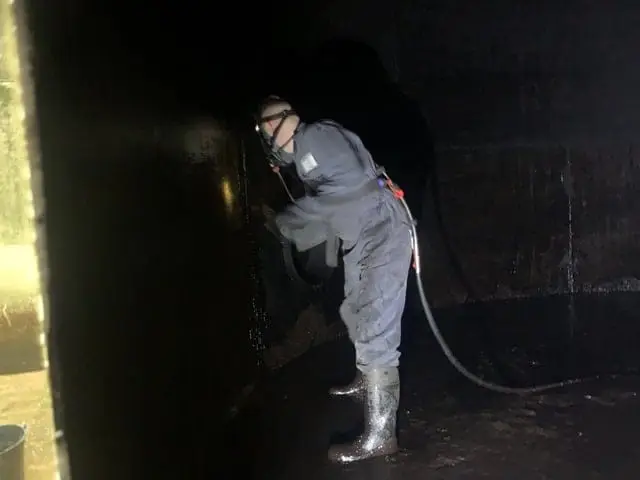
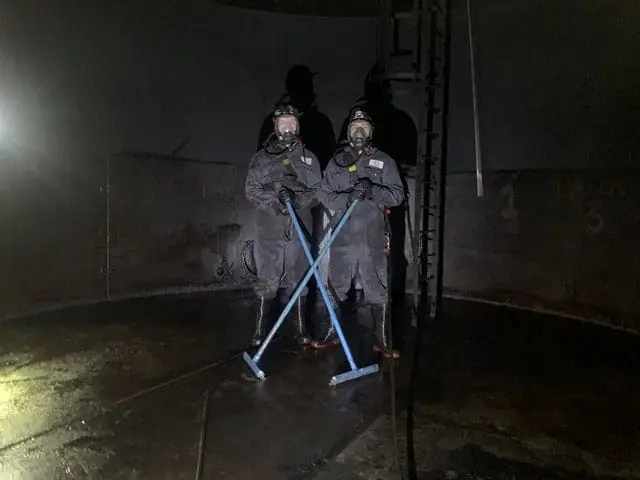
Each tank required emptying and internal cleaning before dismantling could begin.
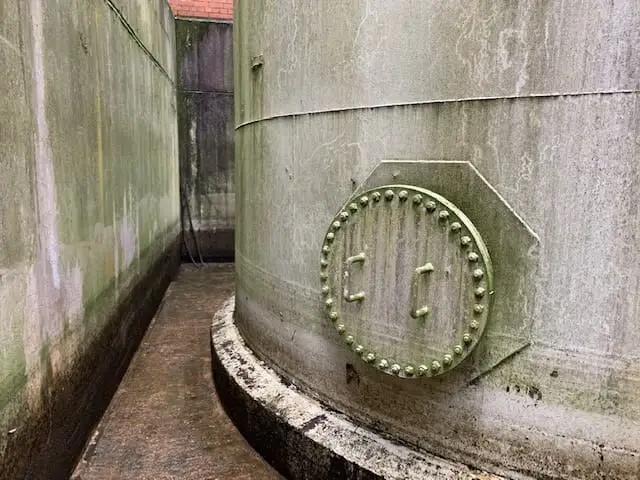
The vessels had large access hatches at the base. However, the deep neck of each hatch would have made entry and exit difficult.
Therefore, JWH cut additional access openings into the sides of the tanks. These openings improved access for personnel and also made waste removal more efficient.
The team then cleaned all four tanks under a confined-space permit issued by the main contractor.
You can read more about JWH’s commercial oil and fuel tank cleaning services
The Health and Safety Executive also provides guidance on working safely in confined spaces
Atmospheric Monitoring and Gas-Free Certification
After tank cleaning, JWH carried out atmospheric monitoring inside each vessel.
This confirmed whether the atmosphere was suitable for the next stage of the work.
Once the team was satisfied with the readings, JWH issued gas-free certificates for all four tanks.
This step was important because the tanks were then cut using propane and oxygen equipment.
Preparing the tanks correctly before hot work reduced the risk associated with residual vapours.
Dismantling the Gantry and Tanks
With the tanks cleaned and certified gas-free, JWH began dismantling the structure above the tank farm.
The team removed the gantry in sections so that it could be reused.
Next, JWH cut the tanks into manageable sections from the outside.
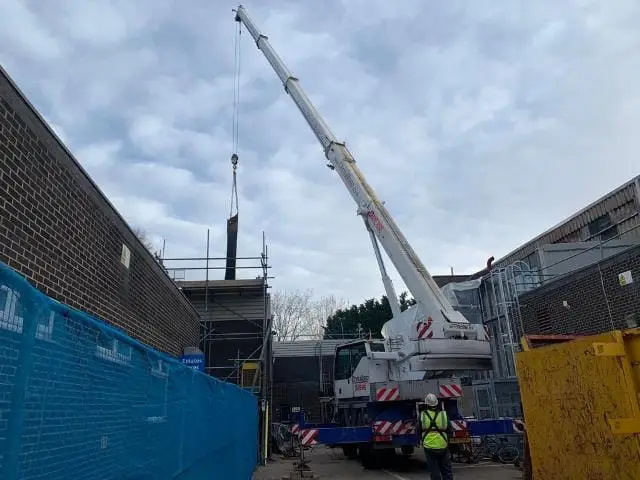
A 50-tonne crane then lowered the gantry sections and tank plates safely to ground level.
The crane team managed the lifting operations carefully to ensure a controlled movement from the tank farm to a nearby 40-yard skip.
You can read more about JWH’s commercial oil and fuel tank removal services
Why Gas-Free Preparation Matters
Fuel tanks can retain flammable vapours even after the liquid contents have been removed.
Therefore, atmospheric testing and gas-free preparation are important before hot cutting or similar work begins.
JWH combines tank cleaning, confined-space procedures and atmospheric monitoring to prepare tanks for safe dismantling.
This is particularly important on live construction sites where other trades may be working nearby.
For more information on controlling fire and explosion risks, see the HSE DSEAR guidance
Handover and Documentation
Once JWH had removed all four tanks, the team handed the area back to the scaffold contractor.
The scaffold contractor could then dismantle and remove the temporary access system so the next phase of the project could begin.
JWH also issued the relevant project documentation to the client and left the work area tidy.
The completed handover allowed the wider hospital project to continue without the redundant tank farm holding up the programme.
The Result
JWH successfully decommissioned and removed all four 160,000-litre fuel tanks from the NHS hospital site.
The completed project included:
removal of approximately 200,000 litres of water from the bund
- oil/water separation before discharge
- safe access into the tank farm
- emptying and internal cleaning of four tanks
- confined-space working
- atmospheric monitoring
- gas-free certification
- dismantling the gantry for reuse
- cutting all four tanks into sections
- lifting tank sections with a 50-tonne crane
- controlled waste handling
- full project documentation and handover
Most importantly, JWH delivered the work using a method designed around the busy site conditions and the presence of other contractors.
Discuss a Tank Farm Decommissioning Project
J W Hinchliffe Tanks provides commercial tank cleaning, decommissioning and removal services throughout the UK.
Our team can support projects involving large tank farms, restricted access, confined spaces, water management within bunds, crane operations and complex live-site conditions.
Contact JWH to discuss your tank farm decommissioning requirements
You can also view our other fuel and oil tank case studies