Domestic Oil Tank Removal and Disposal
Safe Domestic Oil Tank Removal in Yorkshire
J W Hinchliffe Tanks provides professional domestic oil tank removal and disposal for homes across Yorkshire. We safely empty, clean, disconnect and remove unwanted heating oil tanks, including tanks located in gardens, garages, sheds and basements.
Whether your tank is damaged, no longer required or being replaced, our experienced team will plan the work carefully and minimise disruption to your home and garden.
When Should a Domestic Oil Tank Be Removed?
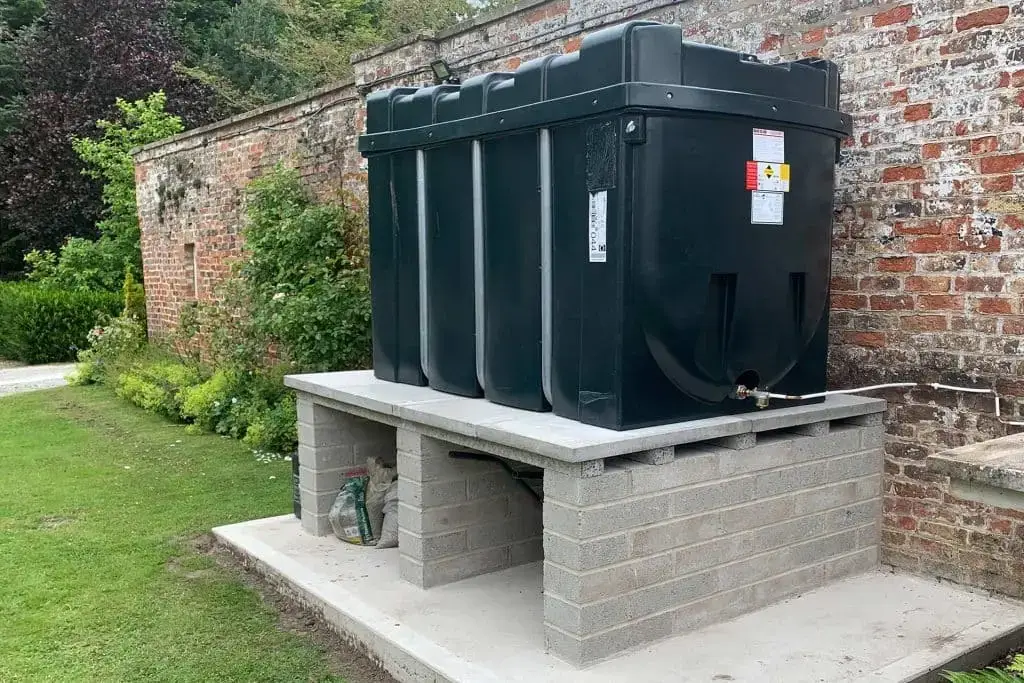
A domestic oil tank may need to be removed because it is damaged, ageing or no longer required. Common reasons include:
- visible cracks, splits, corrosion, bulging or discolouration
- signs of oil leakage or staining
- changing to a different form of heating
- property renovations or landscaping
- replacing the existing tank with a newer model
- moving the oil tank to a more suitable location
- freeing up space in a garden, garage, shed or basement
An old tank does not necessarily need removing purely because of its age. However, it should be checked regularly for deterioration, leaks and damage. Official guidance recommends regular inspection and prompt professional advice if a problem is found.
If you still use oil heating and need a new tank, see our domestic oil tank replacement service.
Why Professional Oil Tank Removal Matters
Removing a domestic oil tank involves more than lifting the tank out of position. Residual oil, sludge and vapours may remain inside even when the tank appears empty.
Therefore, the tank must be emptied and prepared correctly before it is disconnected, moved or cut into smaller sections. Professional removal reduces the risk of:
- oil spills and soil contamination
- damage to buildings, paving or gardens
- unsafe handling of residual fuel and sludge
- problems transporting or disposing of the tank
- avoidable disruption to your property
Oil can contaminate soil, groundwater, drains and nearby watercourses. For that reason, homeowners should not attempt to cut up or dispose of an oil tank themselves.
Customer Testimonials
See what customers say about working with J W Hinchliffe Tanks. Read our Google reviews for recent feedback on our domestic tank services.
Our Domestic Oil Tank Removal Process
Initial Assessment
First, we assess the tank, its contents, construction and location. We also consider access to the property and whether the tank can be removed whole or will need to be cut into manageable sections.
This allows us to prepare a suitable method of work and identify any potential safety or environmental risks before removal begins.
Removal or Transfer of Remaining Oil
Next, any remaining fuel is pumped into an appropriate container.
Where suitable, usable oil may be transferred to another tank on the property. However, oil that is contaminated or unsuitable for reuse will need to be removed for appropriate disposal.
Tank Cleaning and Preparation
Once the recoverable oil has been removed, residual sludge and contaminated material are taken out. The tank is then cleaned and prepared for safe disconnection and removal.
Where necessary, the team will test the atmosphere inside the tank before cutting work begins.
For tanks that are staying in use but have contamination or sludge problems, our domestic oil tank cleaning service or other condition-based testing. may be more appropriate.
Disconnection and Removal
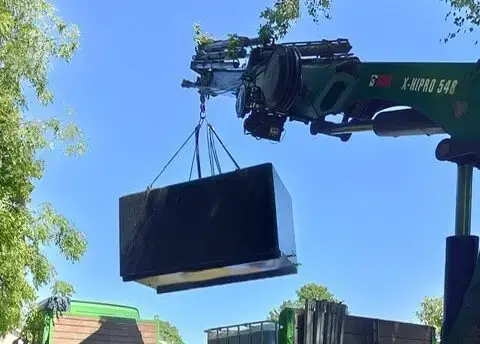
The tank is disconnected from its pipework and base. If access permits, it may be removed in one piece.
Where the tank is too large to pass safely through the available access, it can be carefully cut into smaller sections using suitable equipment. This is particularly useful for tanks located in basements, garages, internal rooms and restricted gardens.
Removal of Waste Materials
The redundant tank, sludge and other waste materials are removed from the property through appropriate waste routes. Relevant documentation is provided for the waste removed from the site.
Removing Oil Tanks from Difficult Locations
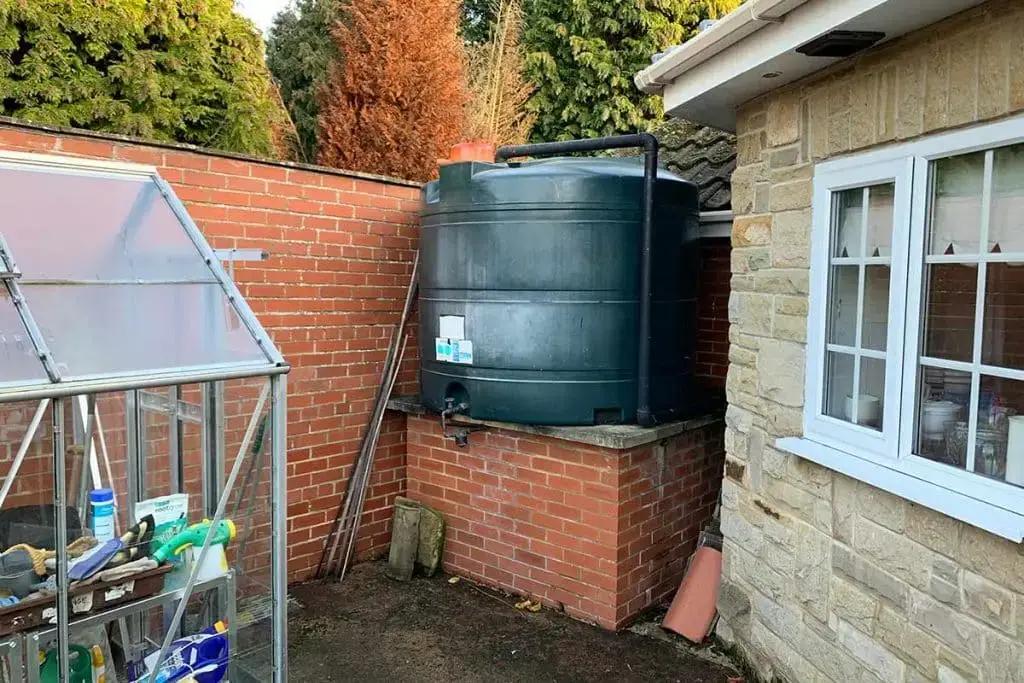
Domestic oil tanks are not always positioned somewhere convenient. Over the years, we have removed tanks from:
- basements and cellars
- garages and outbuildings
- sheds
- restricted rear gardens
- areas with narrow gateways
- properties with limited vehicle access
- locations enclosed by later building work
Where access is difficult, we plan the removal around the property and determine whether the tank can be removed whole or should be dismantled on site.
Please send photographs with your enquiry where possible. Images of the tank, surrounding area and access route help us understand the job and prepare a more accurate quotation.
Domestic Oil Tank Removal or Replacement?
If you are no longer using oil heating, the tank can normally be removed and disposed of once its contents have been dealt with safely.
However, if you intend to continue using oil, you may need the existing tank removed as part of a domestic oil tank replacement.
The location of the new tank, its base, fire separation and environmental protection requirements should be considered before installation.
We can advise whether removal alone is required or whether the project should be planned as a complete tank replacement.
Domestic Oil Tank Safety and Environmental Responsibilities
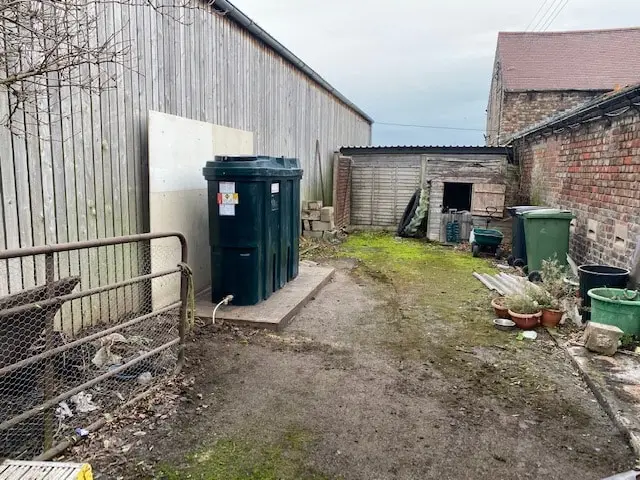
Domestic oil storage should be managed carefully because even a relatively small leak can damage soil, planting, buildings and watercourses.
Homeowners should follow relevant GOV.UK guidance on storing oil at home and seek professional advice if the tank shows signs of cracking, corrosion, distortion or leakage.
Where a new tank is being installed, building regulations and regional requirements may apply. An OFTEC-registered technician can advise on tank location, fire protection, bases, pipework and whether secondary containment is required.
You can also read the OFTEC home guide to domestic oil storage for general information about household oil tanks.
What We Need to Provide a Quotation
To prepare a domestic oil tank removal quotation, it helps if you can provide:
- the approximate tank capacity
- whether the tank is plastic or steel
- the tank’s dimensions, if known
- whether it is above or below ground
- the approximate amount of oil remaining
- whether the oil is still in use
- the tank’s location on the property
- details of access for people, equipment and vehicles
- photographs of the tank and access route
- the property postcode
Even if you do not have all this information, please contact us. We can often provide initial guidance and explain what else is needed.
Why Choose J W Hinchliffe Tanks?
J W Hinchliffe Tanks has more than 50 years’ experience in fuel and oil tank services.
Our domestic oil tank removal service offers:
An experienced in-house team
Careful planning for difficult or restricted locations
Safe removal of residual oil and sludge
Options for transferring usable oil
Tank cleaning and preparation before removal
Removal of plastic and steel tanks
Appropriate waste documentation
Domestic coverage across Yorkshire
Clear advice and quotations
You can view examples of previous work in our tank services case studies.
Arrange Domestic Oil Tank Removal in Yorkshire
Tell us where the tank is located, what it is made from and approximately how much oil remains. Photographs are particularly helpful where access is restricted.
Contact J W Hinchliffe Tanks for advice and a quotation for safe domestic oil tank removal and disposal in Yorkshire.
Domestic Oil Tank Removal FAQs
The price depends on the tank’s size, construction, location, access and the amount of oil or sludge to be removed. A plastic tank in an accessible garden will usually be simpler to remove than a large steel tank in a basement. Photographs and tank details help us provide an accurate quotation.
Yes. Tanks can be removed from basements, garages, sheds and other restricted locations. If the tank cannot be removed whole, it may be cleaned, prepared and cut into smaller sections for safe removal.
Usable oil may sometimes be transferred to another suitable tank. Contaminated oil, water and sludge must be removed and dealt with through appropriate waste routes.
We do not recommend it. A tank that appears empty may still contain oil, sludge and vapours. Cutting, moving and disposing of it without the correct preparation could cause a spill, property damage or safety risk.
Not always. If the tank is outside and access has been agreed, the work may be possible without you being present. However, someone will need to provide access if the tank is inside the property or behind locked gates.
Many straightforward removals can be completed within a day. Larger tanks, difficult access, contaminated contents or tanks that need cutting may take longer. We will explain the likely timescale before work begins.
Yes. If you intend to continue using oil heating, we can remove the existing tank and provide a domestic oil tank replacement service.
The proposed location and installation requirements will be assessed before the new tank is fitted.
Relevant documentation is provided for waste removed from the property. The exact paperwork will depend on the materials and work involved.
Our Accreditations