Commercial Fuel Tank Refurbishment
Commercial Fuel Tank Refurbishment
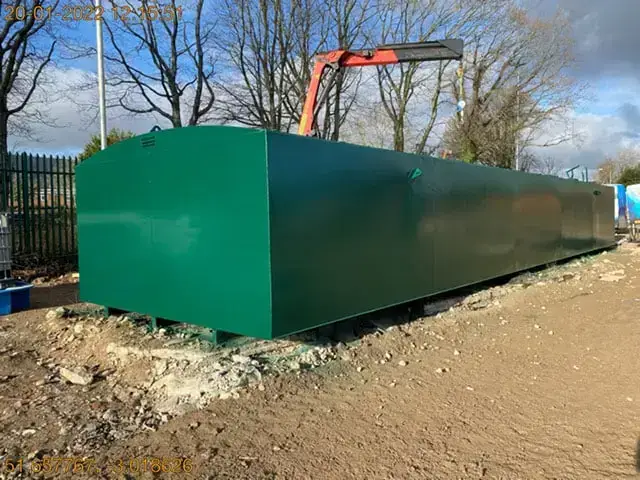
Commercial fuel tank refurbishment can help restore ageing tanks, improve performance and extend the working life of existing fuel storage systems.
At J W Hinchliffe Tanks, we provide fuel tank refurbishment services for commercial sites across the UK. Refurbishment can be carried out either on-site or off-site, depending on the project and the level of disruption involved.
In many cases, refurbishment is a practical alternative to full replacement. For example, the work may include internal cleaning, rust removal, primer, repainting, ancillary equipment work and, where required, additional coating systems or NDT (non-destructive testing).
Need a quote for commercial fuel tank refurbishment?
Call 0113 263 5163, email [email protected], or send over the tank size, tank type, site location and photos so we can advise on the next steps.

Fuel Tank Refurbishment at a Glance
- Commercial fuel tank refurbishment across the UK
- On-site or off-site refurbishment options
- Internal tank cleaning and gas-free preparation
- Rust removal, primer and repainting
- Ancillary equipment installation or cleaning where required
- Resin-based protective coatings for older tanks where needed
- NDT support for more severe cases
- Progress reports and photographs throughout the project
Why Choose J W Hinchliffe for Fuel Tank Refurbishment?
Businesses choose J W Hinchliffe Tanks because we provide a practical, safety-led refurbishment service designed around the condition of the tank and the needs of the site.
- In-house management of the refurbishment process
- On-site or off-site options depending on disruption and access
- Experience in tank cleaning, gas-free preparation and refurbishment support
- Tailored quotations and work systems for each project
- Regular reporting and photographs throughout the job
- Ongoing support after refurbishment is complete
Customer Testimonials
See what customers say about working with J W Hinchliffe Tanks. Read our Google reviews for recent feedback on our commercial tank services.
Our Tank Refurbishment Process
Although every project is different, commercial fuel tank refurbishment usually follows a clear process.
Initial Review and Quotation
First, we assess the tank condition, the likely scope of work and whether refurbishment is the right option. This helps determine the most practical route for the site.
On-Site or Off-Site Planning
Next, we decide whether the refurbishment should be carried out on-site or off-site. This depends on the tank size, access, condition and the level of disruption the site can accommodate.
Cleaning and Preparation
The refurbishment process begins with internal cleaning and preparation of the tank. Where required, this can include gas-free preparation and work on ancillary equipment.
Surface Treatment and Repairs
Rust is removed, primer is applied and the tank is repainted. In more severe cases, additional coating systems may be used to improve long-term protection and extend the life of older tanks.
Testing and Inspection Where Required
Where the tank condition demands it, NDT can be included as part of the refurbishment package.
Reporting and Handover
Throughout the work, progress reports and photographs can be provided. Once completed, the project is handed over with the agreed scope of refurbishment finished and the next steps explained.
Safety, Quality and Efficiency
Fuel tank refurbishment should be planned carefully so the work is completed safely, efficiently and to a high standard.
A safe system of work should be developed for each project, with inspection and testing used where required to maintain quality control. Suitable equipment and technology can also help improve efficiency and reduce downtime.
As a result, refurbishment can often be delivered with less disruption than a full tank replacement, while still improving tank condition, performance and longevity.

What We Need to Quote
To quote for commercial fuel tank refurbishment, we usually only need a few key details.
In many cases, photos and basic tank information are enough for an initial assessment.
- Tank size or capacity
- Tank type and current condition
- Whether the tank is above ground and accessible for on-site work
- The fuel stored or previously stored
- Photos of the tank and surrounding area
- The site location
- Whether downtime must be minimised
- Whether inspection or NDT may be required
Compliance and Inspection Considerations
Commercial fuel tank refurbishment projects should be planned around tank condition, safe working requirements and any inspection needs identified during the assessment stage.
Where appropriate, inspection and testing can form part of the project. NDT may be useful when tank age, corrosion or structural condition need closer review before deciding how far refurbishment should go.
In addition, where flammable liquids are involved, site-specific controls should reflect relevant HSE DSEAR guidance.
Commercial Fuel Tank Refurbishment FAQs
The timescale depends on the tank size, the scope of work and the condition of the tank. Internal cleaning, repainting, additional testing and even weather conditions can all affect the programme.
In many cases, yes, refurbishment can be more cost-effective than replacement. However, the decision depends on factors such as tank age, corrosion level and structural condition.
Not always, because refurbishment can be carried out either on-site or off-site. Smaller tanks may sometimes be uplifted, while larger tanks can often be refurbished in place.
Fuel tank refurbishment can be suitable for a range of tanks, including diesel, gas oil and kerosene tanks. The final scope depends on the tank’s condition, construction and intended use.
Some downtime may be needed, but the work is planned to keep disruption to a minimum. In some cases, a temporary or loan tank may be an option where downtime is especially difficult.
The lifespan depends on the tank’s starting condition, the scope of the refurbishment and how the tank is maintained afterwards. With proper maintenance, a well-refurbished tank can remain in service for many years.
Yes, post-refurbishment support and maintenance can be provided. This may include inspections, corrosion prevention and repairs to help maintain performance and longevity.
Inspection or NDT is most useful when tank age, corrosion or structural condition need closer review before deciding how far refurbishment should go. It can help identify issues that are not obvious from a visual check alone.
Compliance note
These FAQs provide general UK guidance. However, exact requirements can vary depending on tank condition, fuel type, inspection findings and site constraints. Project-specific advice should always be confirmed before work begins.

Nationwide Commercial Tank Services
From Scotland to Cornwall, JWH Tanks delivers top-tier commercial tank services throughout all areas of the UK. Our commitment to nationwide coverage ensures that businesses everywhere can access our expertise. Our coverage includes:
Commercial Fuel Tank refurbishment
J W Hinchliffe Tanks provides commercial tank services across the UK, including fuel tank refurbishment, tank cleaning, tank removal and related support services.
If you need advice on fuel tank refurbishment or the most suitable next steps for your site, contact the team with the tank details and location.
Our Accreditations