Commercial Oil and Fuel Tank Removal Service
COMMERCIAL OIL & FUEL TANK REMOVAL
Service Overview
JWH Tanks has been a trusted name in the safe removal and disposal of fuel and oil tanks for over 50 years. Serving a wide range of clients across the private and public sectors, our commercial and industrial tank removal teams are second to none. As a result, we specialise in a variety of tank removal disciplines, including but not limited to:
- Large-scale fuel and oil tanks located in buildings, basements or externally.
- Underground tank excavations.
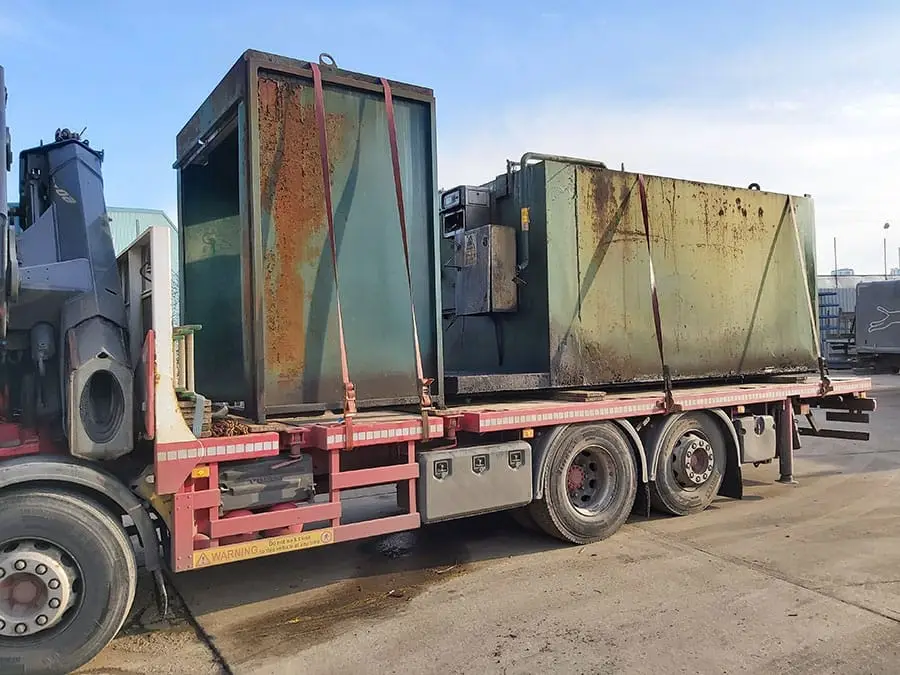
- Lifting and transportation of above-ground fuel and oil tanks.
- Complex decommissioning projects including heavy fuel oil or petroleum.
Regardless of your specific requirements and the size of the tank to be decommissioned, we are confident in our ability to assist. You can contact our experts today by calling 0113 263 5163 or emailing [email protected]
Our Comprehensive Service
Safety First
Your safety is our top priority. That's why we adhere to the highest industry standards to ensure safe, environmentally responsible practices throughout the removal process. This commitment guarantees the protection of both our team members and the environment while delivering a personal service. In turn, it helps keep your site compliant and disruption to a minimum.
Tailored Services
No two projects are the same. For that reason, we customise our services to meet your unique needs. In addition, our safe systems of work are designed by our own in-house team for each and every project.
Efficiency Guaranteed
Our team ensures safe and efficient tank removal, minimising disruptions to your operations. So, from an initial discussion through to contract completion, your business will be our top priority.
Tank Locations We Work In
We have experience removing tanks from various locations, such as basements, schools, office buildings, shopping centres and many more. Read our commercial tank removal case studies to find out more.
Professionalism
JWH have a proud commitment to high standards, ensuring that every aspect of the job is handled with care and expertise. Our numerous SSIP and safety accreditations demonstrate our commitment to a safe and sustainable operation.
Environmentally Responsible Tank Removal
From the moment we start the project to its completion, we handle waste in line with oil storage regulations for businesses. In addition, we clean tanks thoroughly to prevent residual contamination.
In-House Team
All work is carried out by our in-house team, ensuring consistency, quality and accountability.
Direct Communication
We provide direct access to our team for any questions or concerns throughout the tank removal process.For a no-obligation quotation or to discuss your tank removal needs, please get in touch with us via any of the methods on our contact page.
Customer Testimonials
See what customers say about working with J W Hinchliffe Tanks. Read our Google reviews for recent feedback on our commercial tank removal service.
OUR TANK REMOVAL PROCESS
A Safety First Approach
Unlike some companies that subcontract their work, we keep everything in-house. As a result, we maintain direct control over quality and safety. Throughout the tank removal process — from initial planning to completion — a member of our team is available to answer questions and provide support.
If you’d like to discuss your tank removal requirements, please call 0113 263 5163, email [email protected], or use our enquiry form.
Because your satisfaction and safety are our priorities, we’ll guide you every step of the way.
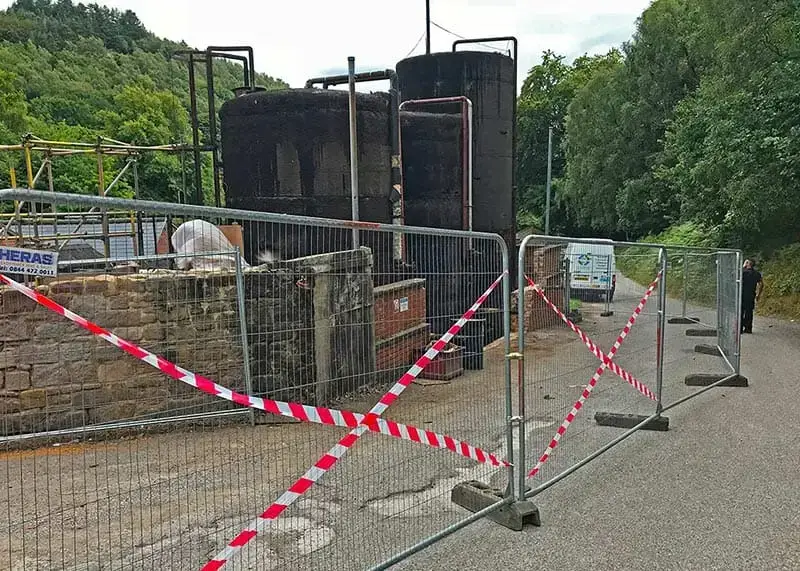
COMMERCIAL OIL AND FUEL TANK REMOVAL
Above Ground Tank Removal
We remove commercial oil and fuel tanks of all sizes. Our team works safely and efficiently, with waste handled responsibly and in line with UK requirements.
Where tanks are often located
- Basements and plant rooms
- Car parks and underground service areas
- Hospitals and public buildings
- Restricted-access or high-security sites
Sites we commonly work on
- Railway locations
- Local authority premises
- Defence and military sites
- Industrial and commercial properties
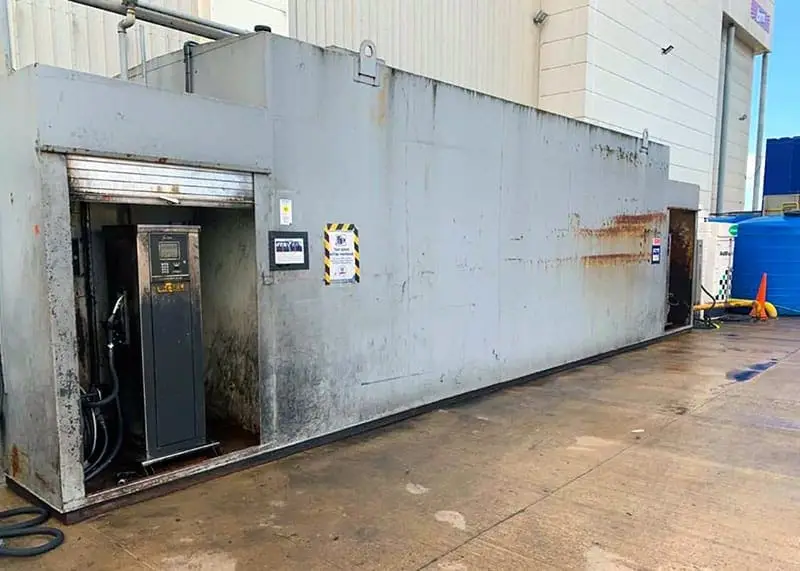
Tank sizes vary widely. We remove anything from small heating oil tanks to large diesel storage tanks in purpose-built rooms.
Obtaining a Quotation
To quote accurately, we’ll ask for:
- Above ground or below ground
- Access details (including any restricted areas)
- Whether the tank is still in use
- Approximate fuel remaining (if any)
- Photos of the tank and access points (for example, manholes)
- Space for large vehicles (where required)
Your quote will include:
- The recommended method and key steps
- What documentation you’ll receive
- Any notifications we can handle on your behalf
- Any important site caveats
COMMERCIAL OIL AND FUEL TANK REMOVAL FAQs
The time needed varies by tank size and where it’s located.
- Best case (easy access): If a lorry-mounted crane can reach the tank, removal can take as little as a couple of hours.
- Inside a building: It usually takes longer because the tank may need cleaning and cutting on site before it can be removed.
- Main factors: tank size, access route, lifting options, and whether on-site cutting is required.
Cost varies based on the tank type, what it has stored, and where it’s positioned.
- Tank type: bunded, single-skin, steel or plastic
- Fuel grade held: diesel, heavy fuel oil and other grades affect cleaning requirements
- Location and access: whether it can be lifted out or needs on-site cutting and removal
- Cleaning needs: heavy fuel oil tanks may need heating and more extensive cleaning, which increases cost
- Potential resale value: some bunded diesel tanks may have resale value that can be credited against the overall cost
Next step: A quick conversation with an engineer can usually give an early indication of scope and likely cost based on your site details.
Working with fuel and oil carries a high level of risk, and mistakes can have serious consequences.
Key risks can include:
- Fire and explosion risk from flammable vapours
- Spills and environmental contamination
- Hazards during cleaning and cutting (including fumes and hot works)
- Manual handling and lifting risks (especially on restricted sites)
How we manage risk
All work is carried out using site-specific safe systems of work and comprehensive risk assessments.
Documentation
You’ll receive copies of the relevant documents to review before work starts.
Our team carries signed copies on site throughout the job.
In most cases, you should not abandon it. Unused or abandoned fuel tanks normally need to be properly removed and disposed of to reduce environmental risk.
- Abandoned tanks can lead to leaks, contamination and liability issues.
- Requirements can vary depending on tank type, condition, contents and location.
If you’re unsure what applies to your site, it’s best to get site-specific advice before deciding on removal or decommissioning.
The risks can be significant. Leaving an old fuel tank in place can create long-term environmental and financial exposure.
- Corrosion and deterioration: older tanks can weaken over time, increasing leak risk
- Leaks and seepage: even small leaks can spread and worsen unnoticed
- Soil contamination: polluted ground can be expensive to investigate and remediate
- Groundwater pollution: contamination can travel beyond your site boundary
- Cost and liability: clean-up can be costly and may bring legal liabilities
The right approach is determined by local requirements and the condition of the tank.
- Regulations: local rules may specify when removal is required versus decommissioning
- Tank condition: age, corrosion, damage and leak history can affect what’s acceptable
- Tank type and location: above-ground vs below-ground, and proximity to buildings or sensitive areas
- Contents and residues: whether fuel, sludge or contamination is present
A site assessment is usually the quickest way to confirm whether decommissioning in place is suitable or if full removal is the safer option.
The process and timeline vary with the tank type, size and site conditions.
What the tank removal process can involve:
- First: Site assessment and plan: confirm tank type, access and method
- Next: Make safe: isolate lines and manage any remaining product
- Then: Cleaning: remove residues and sludge as required
- After that: Removal: lift out or excavate if the tank is below ground
- Finally: Disposal and handover: remove waste and dispose of it correctly, and provide the relevant paperwork for the work completed
How long it takes
Time varies based on tank size, location, access, and soil conditions (for below-ground tanks).
If excavation is required, the job usually takes longer than an above-ground removal.
Requirements vary by local regulations and what the tank has stored. However, some approvals are more common when certain fuels (such as petrol) have been stored.
- What was stored: if petrol has been stored, approvals commonly involve the petroleum licensing authority
- Tank type and location: above-ground vs below-ground, and proximity to drains, buildings or sensitive areas
- Site controls: some sites (for example, rail, hospitals, secure facilities) may require additional permits and method statements
If you tell us your tank type and what it has stored, an engineer can usually confirm what permissions are needed before work begins.
DIY removal is strongly discouraged due to safety and environmental risks. A qualified tank removal company is the safer option.
- Safety: fuel vapours, fire risk, confined spaces, cutting and lifting hazards
- Environmental risk: spills and contamination can be expensive to clean up
- Compliance and paperwork: professional services can follow the correct site controls and provide supporting documentation where required
Arrange for a licensed waste contractor to remove and dispose of any remaining fuel or oil before the tank is taken out.
- Do not decant or dispose of fuel yourself unless you’re authorised and equipped to do so safely.
- Any fuel or oil removed from the site should be covered by the correct paperwork, typically a waste transfer note.
- In addition, a tank removal contractor can usually handle the pump-out and disposal as part of the job, provided you share details on fuel type, estimated volume and site access.
In most cases, the tank is made safe, cleaned and broken down, then the materials are recycled where possible. Any remaining contents are handled through the correct waste routes.
- Tank: typically cleaned, then cut up (if needed) and sent for recycling
- Contents: remaining fuel, sludge and contaminated residues are removed and disposed of in line with hazardous waste requirements
- Documentation: waste movements should be accompanied by the appropriate paperwork for your site records
Do requirements vary by location?
Yes. Requirements can vary depending on your site and local rules.
If you’re unsure what applies, check with the relevant local authority and use an experienced, qualified contractor for site-specific advice.
Compliance note
These FAQs are general guidance for the UK. However, requirements can vary by location, tank type and what’s been stored. For site-specific advice, speak to your local authority or a qualified tank removal contractor before work begins.

Nationwide Commercial Tank Services
From Scotland to Cornwall, JWH Tanks delivers top-tier commercial tank services throughout all areas of the UK. Our commitment to nationwide coverage ensures that businesses everywhere can access our expertise. Our coverage includes:
Our Accreditations