Fuel Sampling Services
Fuel Sampling and Testing for Optimal Performance
Fuel sampling helps identify contamination and quality issues in stored fuel before they lead to equipment problems, downtime or costly remedial work.
At J W Hinchliffe Tanks, we provide fuel sampling services for commercial fuel and oil storage systems across the UK. This service is often used where fuel has been stored for long periods, where contamination is suspected, or where site operators want clearer information about the condition of the fuel.
In many cases, fuel sampling is the first step towards understanding whether remedial action is needed. As a result, it can help protect equipment, improve reliability and support better decisions about the next steps.
Need advice on fuel sampling? We can advise on the most suitable next steps for your site.
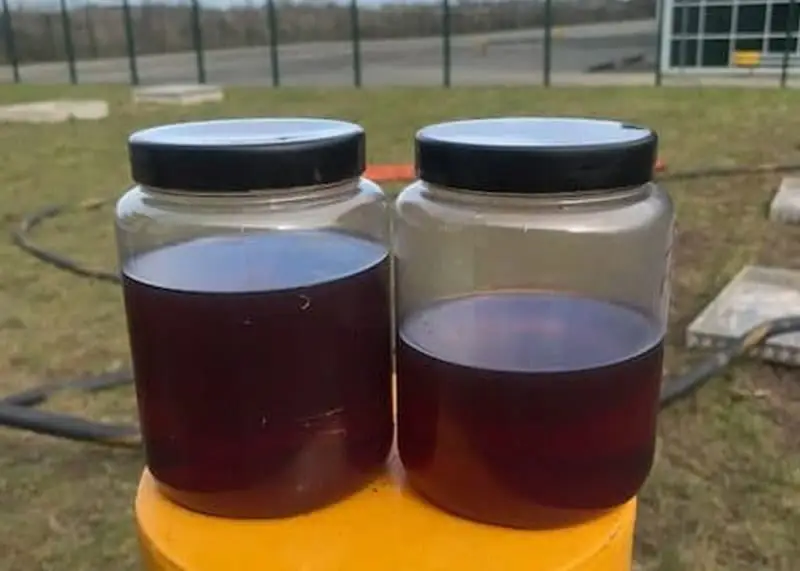
Fuel Sampling at a Glance
- Fuel sampling and testing for stored commercial fuel
- Helps identify bacterial, particulate and water contamination
- Suitable for long-term stored fuel and backup systems
- Independent laboratory analysis
- Easy-to-interpret reporting
- Often the first step before fuel polishing or tank cleaning
- Practical remedial advice where needed
- Nationwide service across the UK
Why Fuel Sampling Matters
Fuel stored for extended periods can become contaminated, especially where it sits unused for months at a time.
In many cases, the main risks are:
- Bacterial contamination
- Particulate contamination
- Water contamination
These problems can affect filters, fuel lines, injectors and overall system performance. Therefore, fuel sampling can be a practical way to identify issues early and reduce the risk of avoidable equipment problems.
Why Choose J W Hinchliffe for Fuel Sampling?
Businesses choose J W Hinchliffe Tanks because we provide a practical, safety-led service designed around the condition of the fuel, the storage system and the site.
OFTEC-registered engineers
Independent laboratory analysis
Easy-to-interpret reporting
Practical advice on next steps
Fuel polishing, tank cleaning and related support where needed
Nationwide commercial tank support
Customer Testimonials
See what customers say about working with J W Hinchliffe Tanks. Read our Google reviews for recent feedback on our commercial tank services.
Our Fuel Sampling Process
Although every site is different, fuel sampling usually follows a clear process.
Initial Review
First, the key details about the fuel, the tank and any known concerns are gathered. This helps determine the likely scope of the sampling work.
Visual Inspection
Next, the tank is visually inspected to help identify any obvious signs of contamination, access issues or concerns with the storage system.
Sample Retrieval
The required fuel samples are then taken carefully from the tank so they can be assessed properly.
Laboratory Analysis
The samples are sent for independent laboratory analysis to assess factors such as bacterial content, ISO cleanliness, FAME content, sulphur content, water content, viscosity and density.
Reporting and Advice
Once the results are available, a clear report is provided. In many cases, this includes a traffic light-style summary together with practical advice on whether monitoring, fuel polishing, tank cleaning or other remedial work may be needed.
Remedial Options After Fuel Sampling
Fuel sampling does not always lead to major remedial work.
In many cases, the next step may simply be ongoing monitoring or further sampling as part of a maintenance regime. However, if contamination is confirmed, remedial actions may include fuel additives, fuel polishing, tank cleaning, pipework cleaning or, as a last resort, uplift and removal of the fuel.
The aim is always to find a safe, practical and cost-effective solution while preserving usable fuel wherever possible.
What We Need to Quote
To quote for fuel sampling, we usually only need a few key details.
In many cases, basic site and tank information is enough for an initial assessment.
- Tank size or capacity
- The type of fuel stored
- How long the fuel has been in storage
- Whether contamination is suspected or confirmed
- Whether the tank is above or below ground
- Photos of the tank and access points where available
- The site location
- Whether the system supports critical equipment such as backup generation
Compliance and Quality Considerations
Fuel sampling should be planned around safe fuel handling, site conditions and the intended use of the stored product.
Clear reporting and independent laboratory analysis help provide a more reliable basis for decision-making. In addition, where flammable fuels are involved, site-specific controls should reflect relevant HSE DSEAR guidance.
Fuel Sampling FAQs
The first step is usually a quick discussion about the tank, the stored fuel and any concerns you have. From there, the likely next steps can be identified quickly.
Not necessarily, because preventive action is often more cost-effective than major corrective work. In many cases, the goal is simply to identify the issue clearly and recommend the most practical solution.
In most cases, fuel sampling can be carried out with minimal disruption. Downtime is rarely needed, and the work is usually clean and straightforward.
In many cases, annual fuel sampling is a sensible preventive measure. However, more frequent checks may be useful for critical systems or where contamination is suspected.
Common signs include equipment problems, reduced efficiency, unusual odours and visible debris or sediment. These can all suggest that fuel sampling is worth carrying out.
The on-site sampling process is usually relatively quick and often takes only a few hours. Laboratory analysis then takes additional time, depending on the tests required.
In many cases, yes, contaminated fuel can still be treated and restored to a usable condition. Fuel polishing, filtration or additives may help, although severe contamination may still require replacement.
The report is designed to be easy to understand and often uses a traffic light-style summary. Green usually indicates no immediate action,amber suggests monitoring or preventive action, and red indicates a more urgent issue.
Compliance note
These FAQs provide general UK guidance. However, exact requirements can vary depending on the fuel type, storage conditions, tank condition and site layout. Project-specific advice should always be confirmed before work begins.

Nationwide Commercial Tank Services
From Scotland to Cornwall, JWH Tanks delivers top-tier commercial tank services throughout all areas of the UK. Our commitment to nationwide coverage ensures that businesses everywhere can access our expertise. Our coverage includes:
Nationwide Commercial Tank Services
J W Hinchliffe Tanks provides commercial tank services across the UK, including fuel sampling, fuel polishing, tank cleaning, tank removal and related support services.
If you need advice on fuel sampling or the most suitable next steps for your site, contact the team with the tank details and location.
Our Accreditations