Domestic Oil Tank Replacement Service
Professional Domestic Oil Tank Replacement in Yorkshire
J W Hinchliffe Tanks provides domestic oil tank replacement services for homeowners across Yorkshire. We can assess your existing tank, transfer suitable heating oil, remove the old tank and install a compliant replacement.
Whether your current tank is damaged, deteriorating or in an unsuitable position, our experienced team will plan the work carefully and minimise disruption to your heating and property.
When Should a Domestic Oil Tank Be Replaced?
A heating oil tank does not necessarily need replacing simply because it has reached a particular age. Its condition, position and suitability are more important.
Replacement may be advisable if the tank shows signs of:
- cracking, splitting or corrosion
- bulging, distortion or significant discolouration
- oil staining, damp patches or leakage
- damage to valves, gauges or pipework
- instability or problems with the supporting base
- deterioration identified during an inspection
- a location that no longer meets current requirements
- insufficient capacity for the household’s needs
You may also need a replacement tank as part of building work, landscaping or changes to your heating system.
If you are no longer using oil heating and do not require a replacement, our domestic oil tank removal service may be more appropriate.
Why Professional Oil Tank Replacement Matters
Replacing a domestic oil tank involves more than exchanging one container for another. The tank position, base, access, pipework, fire separation and environmental risks must all be assessed before installation.
Remaining oil must also be handled carefully. Depending on its condition, it may be transferred temporarily and returned to the new tank, or contaminated fuel and sludge may need to be removed separately.
Professional replacement helps reduce the risk of:
- oil leakage and environmental contamination
- an unsuitable or unstable tank base
- incorrect positioning near buildings or boundaries
- problems during future oil deliveries
- damage to existing pipework
- unnecessary interruption to heating
- non-compliance with building regulations
Customer Testimonials
See what customers say about working with J W Hinchliffe Tanks. Read our Google reviews for recent feedback on our domestic tank services.
Our Domestic Oil Tank Replacement Process
Initial Site Assessment
First, we assess the existing tank, its condition, contents and location. We also inspect the access route, supporting base, pipework and the proposed position of the replacement tank.
This assessment helps determine whether the new tank can be installed in the same location or whether changes are needed to meet current requirements.
Selecting the Replacement Tank
We will discuss the appropriate tank type and capacity for your property.
Factors to consider include:
• Your household’s typical oil use
• Available space
• Access for installation
• Access for future oil deliveries
• Environmental sensitivity
• The required level of secondary containment
• Proximity to buildings, boundaries and sources of ignition
Where appropriate, a bunded tank may be recommended or required. A bunded tank has an outer containment layer designed to hold oil if the inner tank leaks.
Preparing the Site
Before the replacement tank is installed, the supporting base and surrounding area are checked.
If the existing base is not suitable, alterations or a new base may be required. Any necessary preparatory work can usually be completed before the old tank is disconnected, helping to keep interruption to your heating to a minimum.
Transferring the Heating Oil
Suitable heating oil can normally be pumped into a temporary holding tank while the replacement work takes place.
Fuel from the bottom of an older tank may contain water, sediment or sludge. Therefore, the oil will be assessed before it is returned to the new tank.
Where contamination is suspected, our domestic oil tank cleaning service may also be relevant.
Removing the Existing Tank
Once the oil has been transferred, the old tank is emptied, cleaned as necessary and disconnected from its pipework and base.
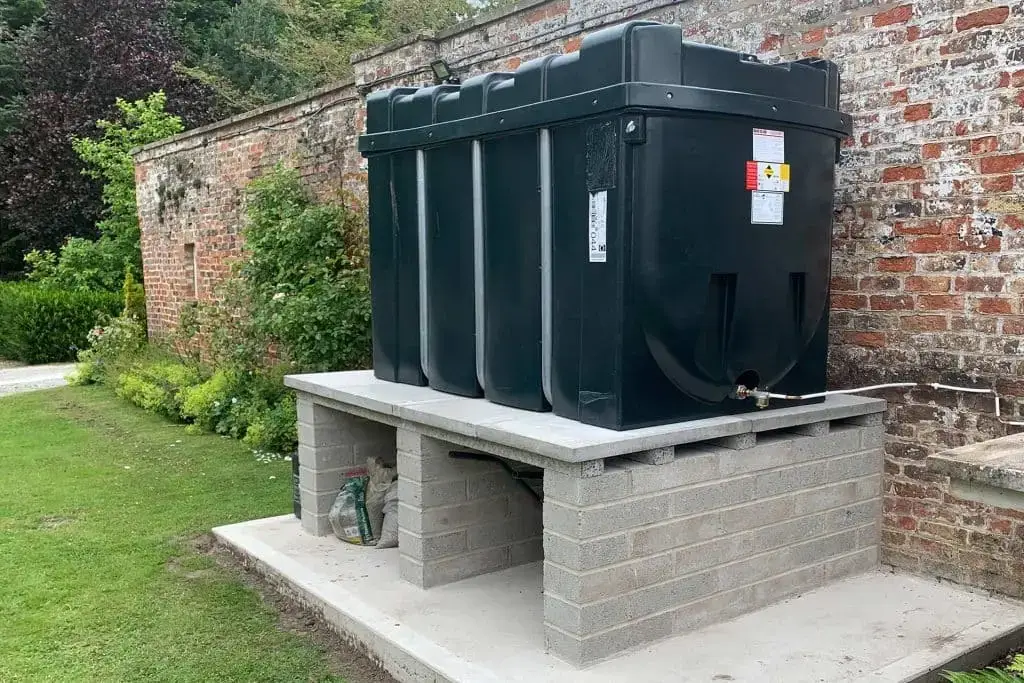
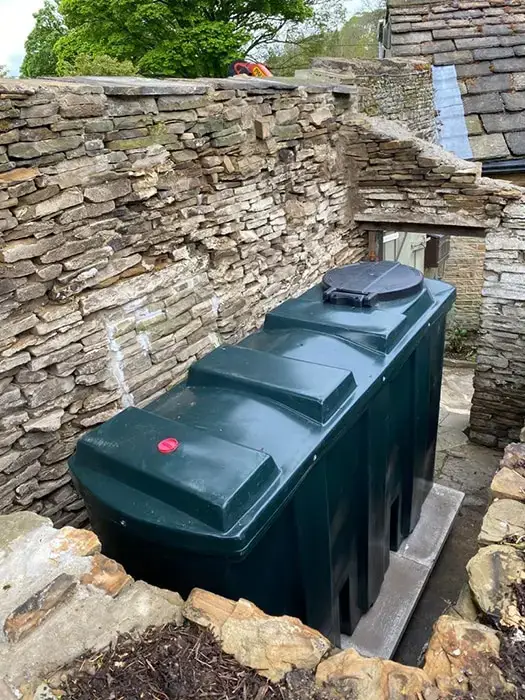
If access permits, the tank may be removed whole. However, tanks in restricted gardens, garages or enclosed locations may need to be carefully cut into smaller sections.
You can read more about our domestic oil tank removal process.
Installing the New Oil Tank
The replacement tank is positioned on the prepared base and connected to the heating system.
The installation is then checked and commissioned. Where the work falls within the OFTEC competent person scheme, it can be notified and self-certified in accordance with the relevant building regulation process.
Returning the Oil
Once the new installation is ready, suitable heating oil is pumped into the replacement tank.
The system is checked before being returned to service. Where necessary, steps may be taken to prevent sludge or contaminated material from being transferred into the new tank.
Removing Waste Materials
The old tank, contaminated sludge and other waste materials are removed through appropriate waste routes.
Relevant documentation will be provided for waste removed from the property.
Can a Replacement Tank Go in the Same Place?
A like-for-like replacement may sometimes be possible, but it cannot be assumed that the existing position remains suitable.
Requirements may have changed since the original tank was installed. The site assessment will consider matters such as:
- distance from buildings, doors and windows
- proximity to boundaries and combustible materials
- the condition and size of the base
- access for inspection and maintenance
- access for fuel deliveries
- protection from impact or accidental damage
- pollution risks if a leak occurs
If the preferred location does not meet current requirements, possible solutions may include moving the tank, altering the surrounding area or considering a suitably fire-protected installation.
Domestic Oil Tank Regulations and OFTEC Registration
A new or replacement oil storage tank at a home in England must meet the applicable building regulations.
Using an appropriately registered competent person can simplify the process because eligible installation work can be self-certified without a separate inspection by building control.
For further information, see GOV.UK guidance on storing oil at home.
You can also read OFTEC’s guidance on building regulations and heating installation work.
OFTEC self-certified work may also benefit from its workmanship warranty, subject to the scheme’s eligibility requirements and terms.
Read more about the OFTEC workmanship warranty.
Will I Be Without Heating?
Many straightforward domestic tank replacements can be completed within a day. However, the timescale depends on access, the condition of the oil, the proposed location and whether a new base or other alterations are required.
Where preparatory work is necessary, we will normally try to complete it before the existing tank is disconnected.
A temporary tank may be considered where appropriate, particularly if the work cannot be completed without an extended interruption to the oil supply.
What We Need to Provide a Quotation
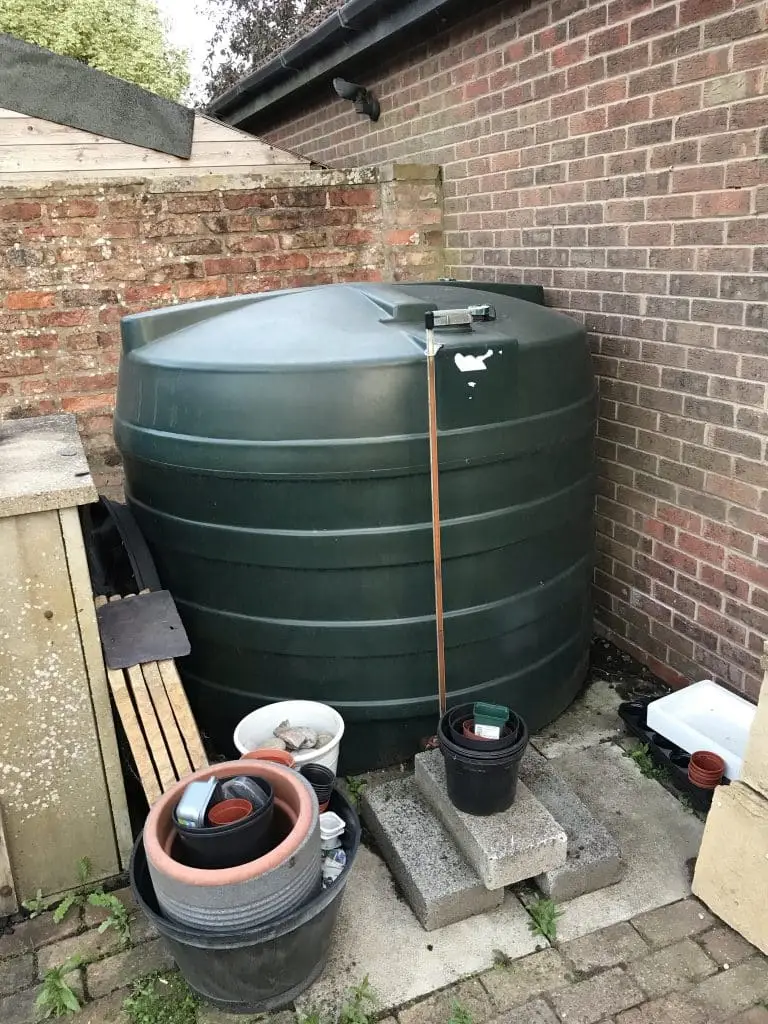
To prepare a domestic oil tank replacement quotation, it is helpful if you can provide:
- the property postcode
- the approximate capacity of the existing tank
- whether the tank is plastic or steel
- the tank dimensions, if known
- the approximate amount of oil remaining
- details of any visible damage or leakage
- the tank’s location
- details of the supporting base
- information about access to the tank
- photographs of the tank and surrounding area
- photographs of the route from the road to the tank
- whether you hope to use the same location
Even if you do not have all this information, please contact us. We can explain what is needed and may be able to provide initial guidance from photographs.
Why Choose J W Hinchliffe Tanks?
J W Hinchliffe Tanks has more than 50 years’ experience in fuel and oil tank services.
Our domestic oil tank replacement service offers:
Experienced, in-house tank specialists
OFTEC-registered installation work
Assessment of the tank position and base
Safe transfer of suitable heating oil
Removal of contaminated sludge where required
Removal and disposal of the old tank
Installation of plastic or steel replacement tanks
Careful planning for restricted access
Domestic coverage across Yorkshire
Clear advice and quotations
You can view examples of our work in our tank services case studies.
Arrange Domestic Oil Tank Replacement in Yorkshire
Tell us about your existing tank, where it is located and whether it shows any signs of damage or leakage. Photographs of the tank, base and access route will help us assess the work.
Contact J W Hinchliffe Tanks for advice and a quotation for domestic oil tank replacement in Yorkshire.
Domestic Oil Tank Replacement FAQs
Possibly. However, the existing position must be assessed against current requirements. If the location, base or surrounding clearances are unsuitable, changes may be needed before the replacement tank can be installed.
Many straightforward replacements can be completed within a day. The work may take longer if access is difficult, the oil is contaminated or a new base and other alterations are required.
Suitable heating oil can normally be transferred into a temporary holding tank and returned after installation. Water, sludge or contaminated oil from the bottom of the old tank may need separate removal and disposal.
There will usually be a period when the oil supply is disconnected. However, we plan the work to minimise disruption. Where appropriate, preparatory work can be completed beforehand or a temporary tank may be considered.
This depends on the tank capacity, location and environmental risks. The site assessment will determine whether secondary containment is required or advisable.
Where the work is eligible under the competent person scheme, the installation can be notified and self-certified by an appropriately registered OFTEC technician. You will receive the relevant certification for the work.
The tank will normally carry the manufacturer’s applicable warranty. Eligible self-certified installation work may also benefit from the OFTEC workmanship warranty, subject to its terms and conditions. The specific cover will be explained with your quotation or installation paperwork.
Yes. Removal of the existing tank, appropriate handling of the remaining oil and disposal of the old tank can all be included within the replacement project.
Our Accreditations