
Project Overview
In 2025, J W Hinchliffe Tanks completed a major fuel tank installation project for an NHS Trust in the north of England.
The existing hospital tank farm contained four large heavy fuel oil tanks, each with a capacity of approximately 100,000 litres. These tanks needed to be decommissioned, cleaned, removed and disposed of before the old compound could be demolished.
JWH then constructed a new fuel storage compound and installed a 25,000-litre bunded fuel tank, together with new pumps, stainless steel pipework, filtration, alarms, telemetry and overfill protection.
The project was carefully phased to protect critical hospital services and minimise disruption to the site.
Project at a Glance
Client sector: Healthcare and NHS facilities
Location: North of England
Project year: 2025
Existing tanks: Four 100,000-litre heavy fuel oil tanks
Replacement tank: One 25,000-litre bunded fuel storage tank
Services provided:
- project planning and design coordination
- temporary boiler provision
- waste fuel removal
- tank cleaning and gas-free preparation
- cutting and removal of redundant tanks
- tank farm demolition
- construction of a new fuel compound
- fuel tank installation
- pump and pipework installation
- testing, commissioning and handover
The Client’s Requirements
The NHS Trust required the existing heavy fuel oil tank farm to be replaced with a smaller, modern fuel storage and delivery system.
The work had to be completed on a live hospital site. Therefore, continuity of heating and other critical services was a central project requirement.
The client also required:
- detailed design and structural input
- formal approval of drawings and working methods
- a temporary heating solution during the works
- safe removal of the old fuel and tanks
- demolition of the existing compound
- construction of a secure replacement compound
- installation and commissioning of the new fuel system
- full operating and maintenance documentation
Planning and Design
Following a successful tender process, JWH began by consulting with the Trust and other project stakeholders.
Next, JWH appointed an architect and structural engineer to design the new compound and confirm that the proposed reinforced concrete pads would support the new equipment.
The planning stage also included:
- preparation of project drawings
- method statements and risk assessments
- lifting plans
- submission of the required F10 notification
- development of the project programme
- pre-start meetings with the Trust
- coordination with hospital estates and emergency departments
This preparation helped ensure that the project could proceed safely while the hospital remained operational.
Maintaining Critical Hospital Services
Maintaining the heating supply was one of the project’s most important challenges.
Therefore, JWH supplied and commissioned a temporary steam boiler to support the hospital while the original system was taken out of service. The temporary boiler also helped reduce the viscosity of the remaining heavy fuel oil so it could be removed more effectively.
In addition, JWH carefully phased the shutdown and changeover work. Contingency plans, agreed shutdown windows and allowances for out-of-hours work helped minimise the risk of disruption to critical services.
Decommissioning the Existing Tank Farm
First, JWH uplifted and removed the existing heavy oil through appropriate waste routes.
Next, the team cleaned each of the four 100,000-litre tanks and prepared them to gas-free standards before cutting and removal began.
JWH carefully dismantled, lifted and removed the tanks from the hospital site for disposal.
This part of the project drew on JWH’s experience in commercial oil and fuel tank removal.
The cleaning and gas-free preparation also reflected the methods used within our commercial tank cleaning services.
Demolition and Ground Preparation
Before demolition, the project team completed ground scanning and structural surveys.
Once the surveys were complete, the team demolished the existing brick bund walls, tank bases and concrete slab. Ground contamination testing and validation work followed to confirm the condition of the site before construction of the new compound.
However, careful sequencing was essential because of:
- restricted space
- limited access
- hospital traffic
- existing underground and above-ground services
- the need to maintain safe access around the working area
Plant, lifting equipment and deliveries were planned around these restrictions.
Construction of the New Fuel Compound
Following demolition, JWH constructed a new secure fuel compound on the cleared site.
The completed compound included:
- reinforced concrete tank and equipment pads
- compound lighting
- palisade-style security fencing
- a gated HGV access point
- line marking
- protected access for operation and maintenance
The layout was designed to accommodate the new tank, pump equipment and associated pipework while allowing safe future access.
Installing the New Fuel Tank and Pump System
JWH supplied and installed a new 25,000-litre bunded fuel storage tank.
The tank included:
- a lockable, full-height equipment cabinet
- an offset filling point
- a fuel recirculation unit
- filtration equipment
- tank alarms
- a level gauge
- building management system relays
- overfill prevention equipment
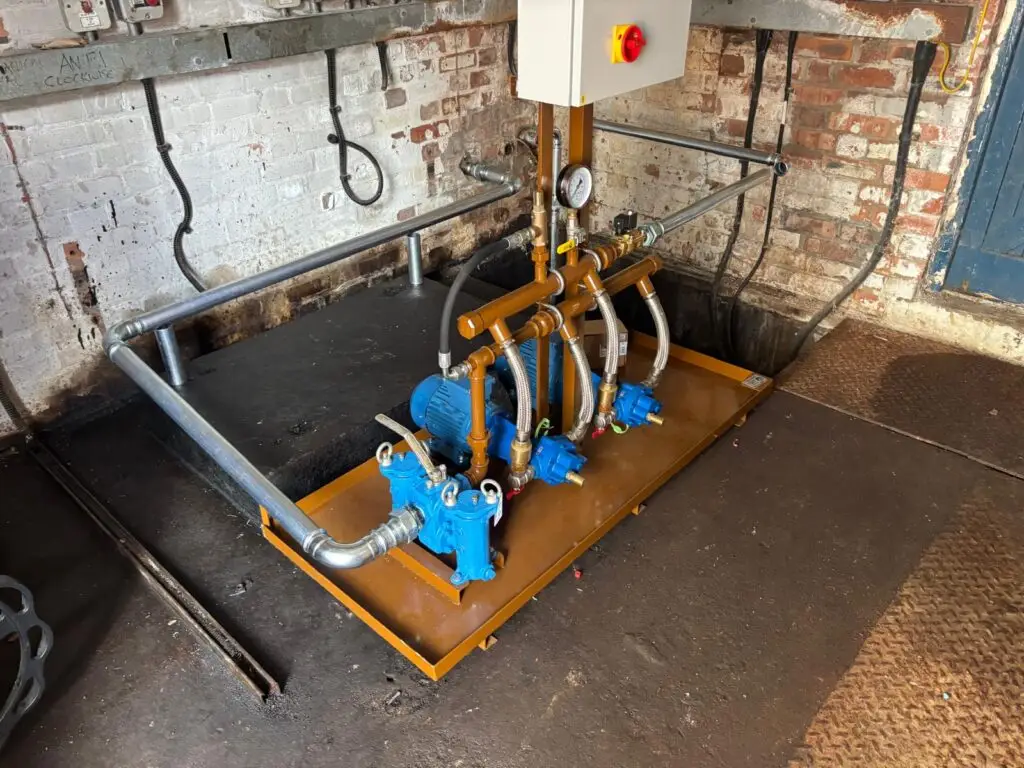
In addition, JWH installed duplex standby gear pumps to provide resilience within the fuel delivery system.
The team then fitted stainless steel pipework between the tank, pumps and hospital boilers. This included:
- a new filling point
- fuel flow lines
- fuel return lines
- isolation arrangements
- connections to the existing heating infrastructure
The team pressure tested the completed pipework and fuel system before commissioning.
You can read more about JWH’s commercial fuel tank installation service.
Health, Safety and Environmental Controls
The work was supported by detailed project-specific controls, including:
- safe systems of work
- risk assessments
- COSHH assessments
- lifting plans
- asbestos surveys
- licensed waste handling
- controlled site access
- fencing, signage and welfare facilities
- coordination with hospital departments
Where fuel storage and flammable liquids are involved, site controls should reflect relevant HSE DSEAR guidance.
Testing, Commissioning and Handover
JWH commissioned the new fuel system in collaboration with the Trust’s facilities team.
Testing confirmed the operation of the tank, pumps, pipework, alarms, controls and associated equipment.
Following commissioning, JWH removed the temporary works and left the compound clean and ready for use.
The final operating and maintenance manual included:
- waste transfer documentation
- project drawings
- equipment certificates
- operating procedures
- safety information
- commissioning records
The Result
The NHS Trust received a modern fuel storage compound designed around the hospital’s operational requirements.
The project successfully delivered:
- safe removal of four redundant heavy fuel oil tanks
- continuity of critical hospital heating services
- demolition of the old tank farm
- construction of a secure new compound
- installation of a 25,000-litre bunded tank
- new pumps, pipework, filtration and control equipment
- a fully tested and commissioned fuel system
- complete operating and maintenance documentation
Furthermore, more than 90% of the waste generated on site was recycled, helping the Trust support its sustainability objectives.
Discuss a Commercial Fuel Tank Installation
J W Hinchliffe Tanks provides commercial fuel tank installation, replacement and associated tank services throughout the UK.
We can support projects involving new storage tanks, replacement tank farms, pumps, pipework, controls, temporary fuel arrangements and the removal of redundant equipment.
Contact our team to discuss your fuel storage requirements or request a quotation.
View our other tank services case studies.