Project Overview
In 2025, J W Hinchliffe Tanks completed a complex fuel tank replacement project for a hospital in Yorkshire.
The existing 60,000-litre bulk fuel tank had failed an integrity inspection. In addition, the hospital had experienced long-standing problems supplying fuel to boilers positioned on a second-floor mezzanine.
Therefore, JWH developed a new solution that combined a 20,000-litre bulk fuel tank with a purpose-built day tank fabricated directly on the mezzanine.
The project also involved temporary fuel storage, fuel polishing, removal of the redundant tank, new pipework, controls and ancillary equipment.
Throughout the work, maintaining the hospital’s fuel supply remained a key priority.
Project at a Glance
Client sector: Healthcare
Location: Yorkshire
Project year: 2025
Existing bulk tank: 60,000-litre vertical cylindrical tank
Replacement bulk tank: 20,000-litre tank
Additional installation: Purpose-built day tank on second-floor mezzanine
Key challenges: Restricted access, elevated boilers, limited space and continuity of fuel supply
Services provided:
- project assessment and design development
- structural and fire-safety consultation
- temporary fuel storage
- fuel polishing
- redundant tank cleaning and removal
- scaffold and crane coordination
- in-situ day tank fabrication
- new concrete tank base
- bulk fuel tank installation
- stainless steel pipework
- pumps, filtration, alarms and controls
- testing, commissioning and handover
The Client’s Requirements
The hospital required a reliable replacement for its failed bulk fuel tank while also addressing historical problems with fuel distribution to the boilers.
The boilers were approximately 7.2 metres above ground level. Therefore, an externally mounted gravity-feed day tank would have required an impractically high supporting structure.
Instead, JWH investigated whether a new day tank could be fabricated directly on the mezzanine beside the boilers.
The project needed to:
- replace the failed bulk fuel tank
- maintain the hospital’s fuel supply during the works
- improve the reliability of fuel delivery to the boilers
- overcome severe access restrictions around the existing tank farm
- provide suitable secondary fuel storage at mezzanine level
- comply with relevant fire and fuel-storage requirements
- work within the Trust’s available budget
Investigating the Best Solution
Following the initial meeting, JWH considered several potential solutions.
Because the proposed day tank would sit on an elevated internal mezzanine, the team consulted structural engineers. They confirmed that the platform could safely support the additional load.
JWH also consulted the Trust’s Fire Officer about the proposed internal tank.
In addition, the team worked with specialist crane contractors to establish how the existing and replacement bulk tanks could move safely in and out of the restricted bund area.
Once the team had resolved these issues, JWH submitted a detailed costed proposal. The Trust approved the solution and instructed the project to proceed.
Temporary Fuel Supply
Maintaining hospital operations during the tank replacement was essential.
Therefore, JWH supplied and installed a temporary bunded fuel tank before taking the existing bulk tank out of service.
The team then polished usable fuel from the redundant tank into the temporary storage tank. Next, they connected the temporary supply to the existing system.
You can read more about JWH’s fuel polishing service.
This temporary arrangement allowed the hospital to continue operating while JWH replaced the permanent fuel-storage system.
Decommissioning the Existing Bulk Tank
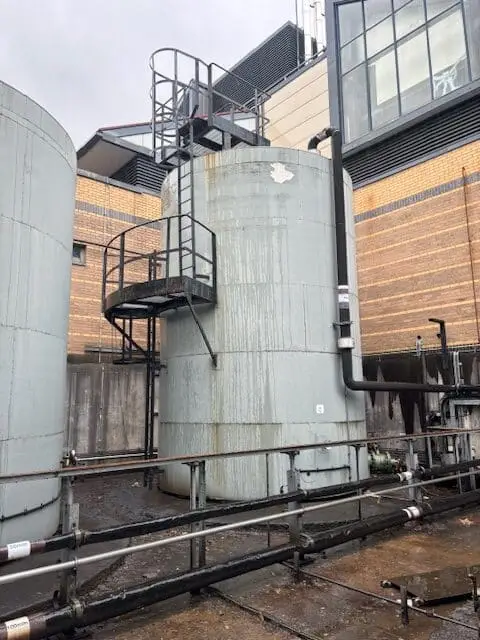
The redundant tank was a 60,000-litre vertical cylindrical vessel. It had previously stored heavy fuel oil before later being used for 35-second heating oil.
No records were available to confirm whether the tank had been cleaned when the fuel type changed.
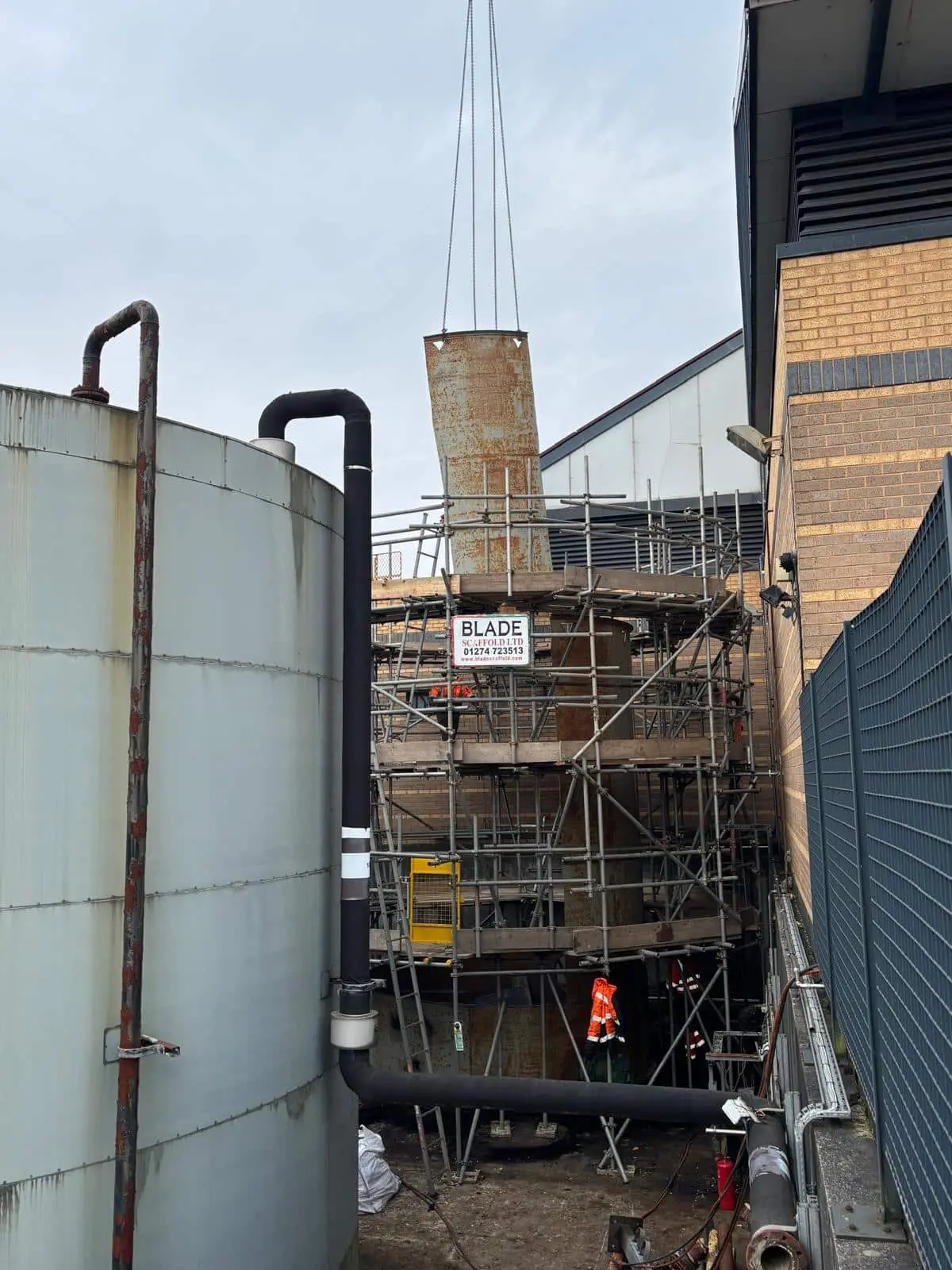
Because buildings had gradually enclosed the original tank farm, access to the bund was extremely restricted.
As a result, JWH decided that cutting the tank into sections would provide the safest and most practical removal method.
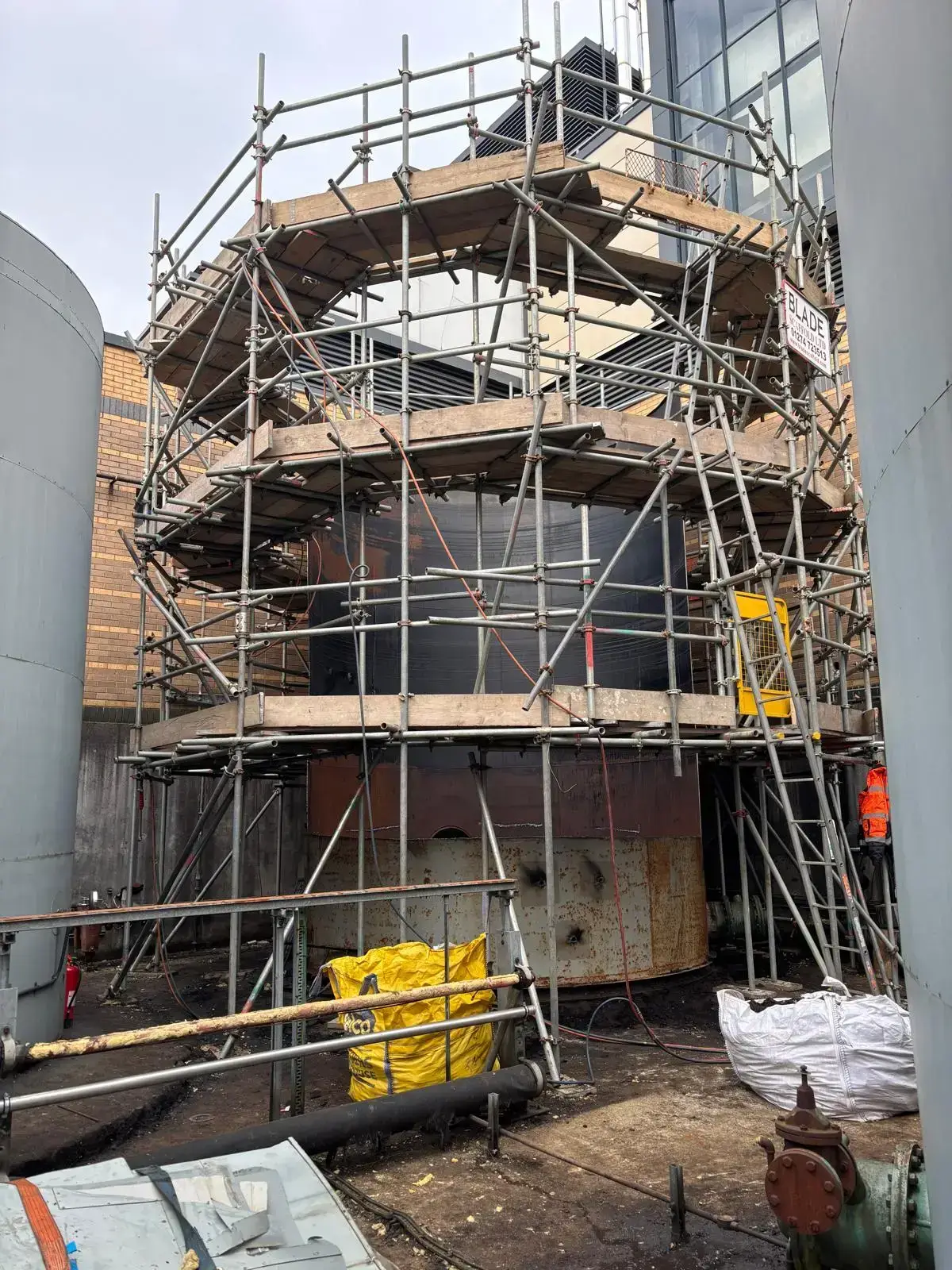
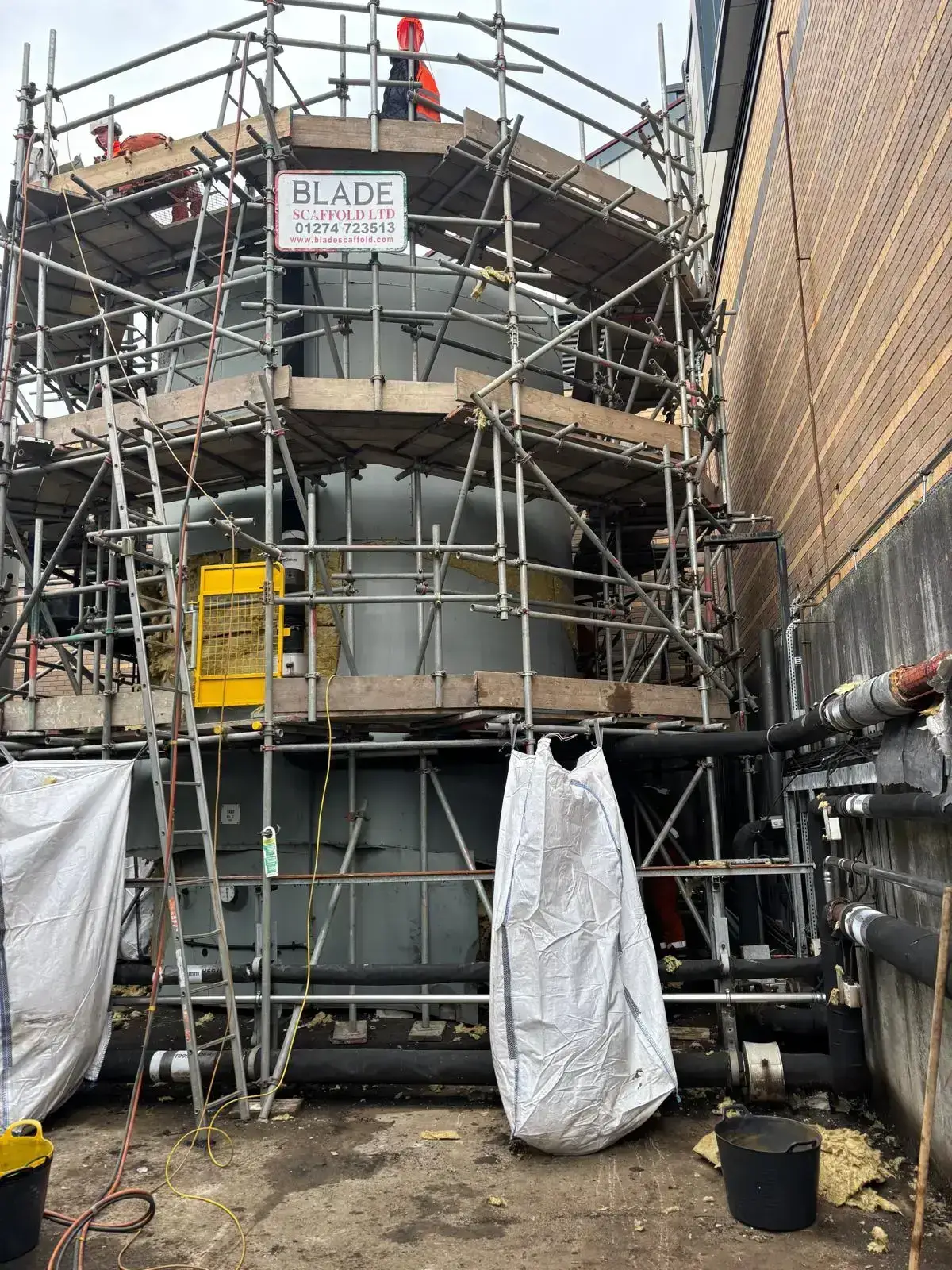
First, an accredited scaffolding contractor installed suitable access around the vessel.
Next, JWH’s in-house cleaning team emptied and cleaned the tank and prepared it to gas-free standards. The team also removed the redundant pipework and cladding.
JWH then cut the tank into predetermined sections. Next, the team worked with the crane operator to lift each section safely from the bund for disposal.
This work drew directly on JWH’s commercial oil and fuel tank removal services.
The failed integrity inspection that prompted the project also demonstrates the importance of appropriate tank integrity testing.
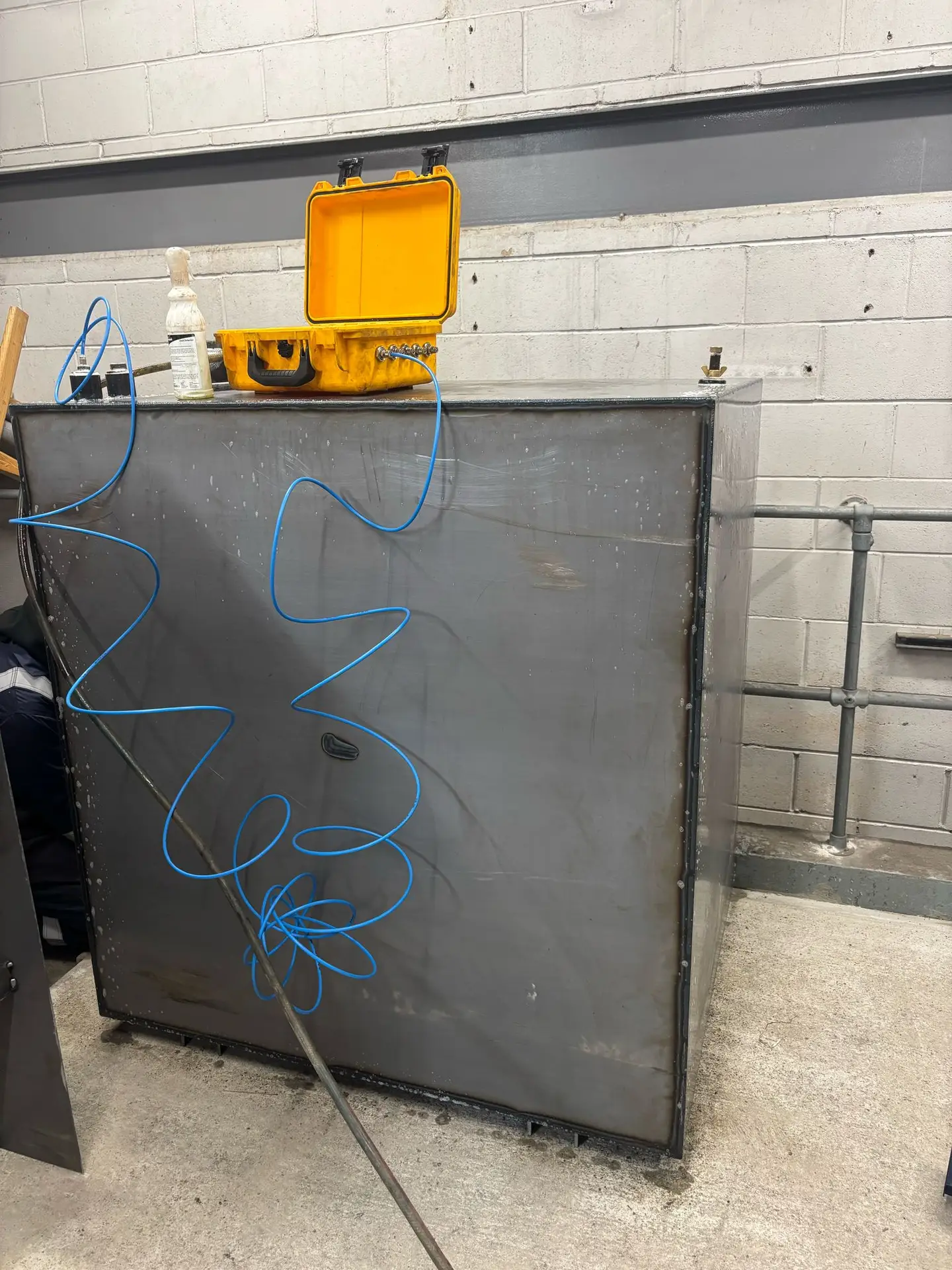
Fabricating the New Day Tank
The hospital’s boilers sat approximately four metres above floor level on an internal mezzanine.
Before installation, JWH obtained a structural report to confirm that the platform could safely support the proposed day tank.
Access prevented a completed tank from being lifted into position.
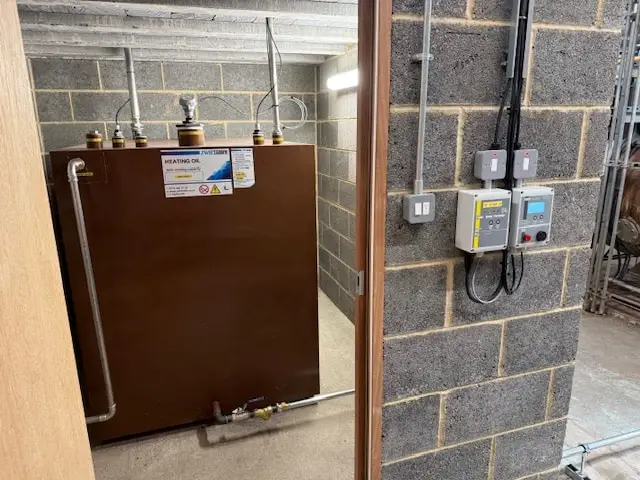
Therefore, the team fabricated the new tank in situ using laser-cut steel sheets produced from the approved CAD design.
Once fabrication was complete, the team:
- pressure-tested the tank
- painted and finished the vessel
- positioned it ready for use
- constructed a fire-rated enclosure around the installation
This approach allowed the hospital to gain the benefits of a day tank despite the severe space and access restrictions.
Preparing the New Bulk Tank Base
The redundant bulk tank had stood on a base constructed from sand and bitumen.
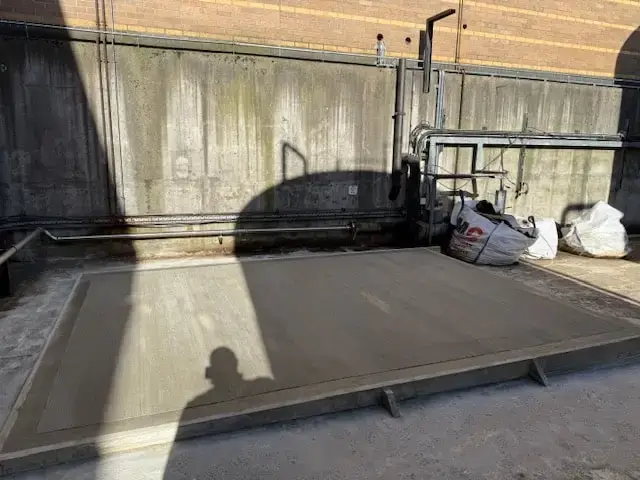
Therefore, JWH designed and constructed a new reinforced concrete slab to provide a flat and suitable surface for the replacement tank.
Access presented another challenge.
As a result, the team had to pump concrete approximately 25 metres over the surrounding wall before finishing the new pad inside the tank compound.
Installing the New Bulk Fuel Tank
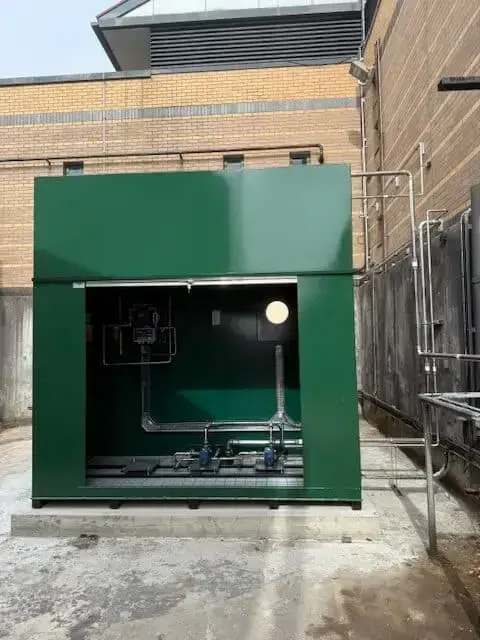
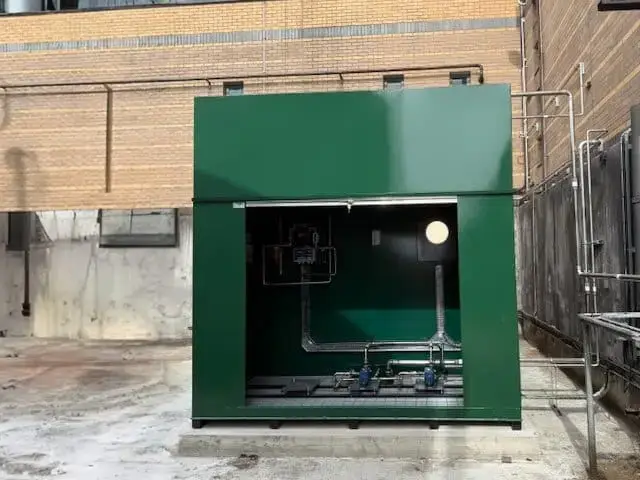
JWH supplied and installed a new 20,000-litre bulk fuel storage tank.
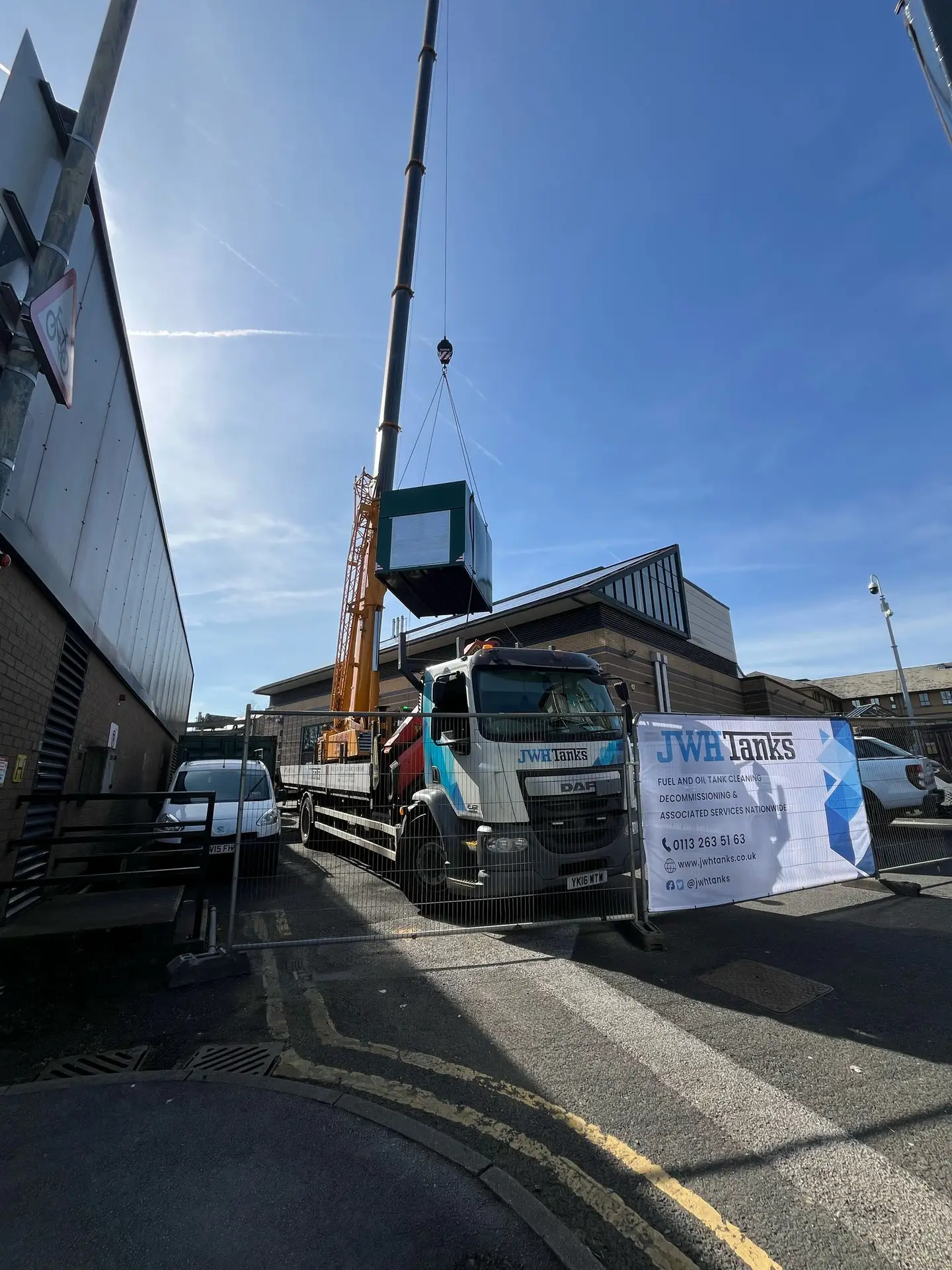
A 150-tonne crane lifted the tank over the surrounding structures and placed it onto the newly constructed concrete base.
The replacement tank included a 1.5-metre-deep equipment cabinet. This housed the pumps and ancillary equipment required to transfer fuel to the new mezzanine day tank.
Because the existing remote fill arrangement was also in poor condition, JWH installed:
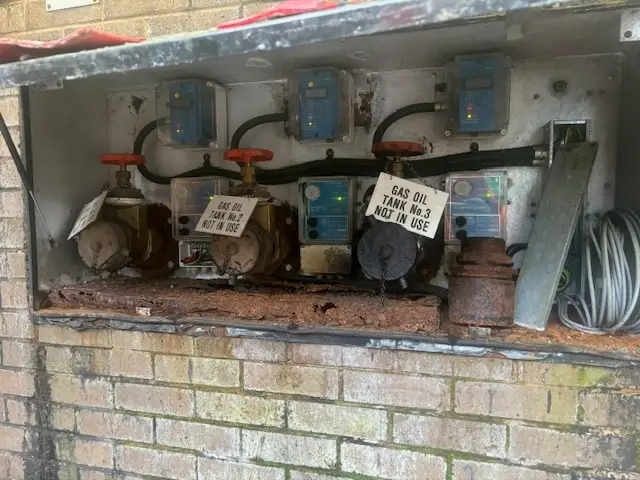
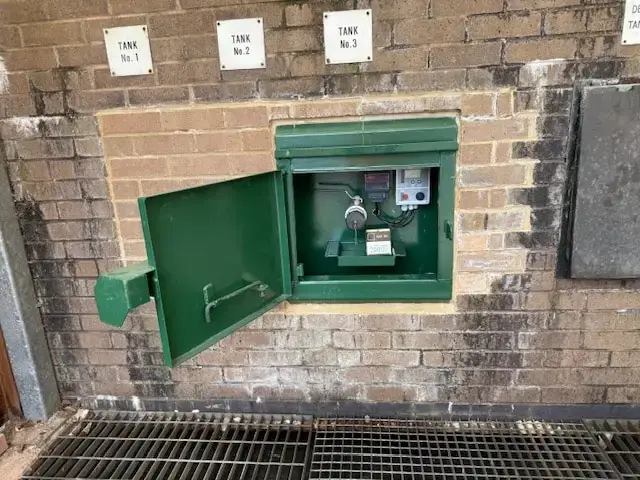
- a new lockable fill-point cabinet
- a two-inch stainless steel fill line
- a mechanical overfill prevention valve
You can read more about JWH’s commercial fuel tank installation service
Pipework, Pumps and Control Equipment
The bulk tank and day tank were approximately 15 metres apart.
Therefore, the project required a new fuel-transfer system capable of operating safely and reliably between the two locations.
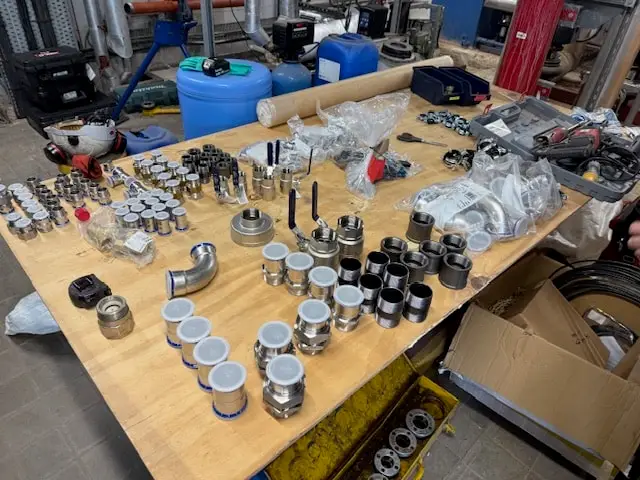
JWH installed equipment including:
- electronic tank gauges with high, low and bund alarms
- BMS relays
- a day-tank level controller and failsafe system
- return-to-bulk functionality
- fire valves and fusible links
- solenoid shut-off equipment
- stainless steel Mapress pipework
- isolation and non-return valves
- twin liquid-ring pumps with crossover capability
- automatic fuel recirculation
- magnetic, water and particulate filtration
The team also labelled the fuel-flow routes. In addition, they pressure-tested the completed pipework before commissioning.
Health, Safety and Site Coordination
This project required close coordination between JWH, the hospital Trust and specialist contractors.
In particular, the team had to manage:
- a live healthcare environment
- severely restricted access
- scaffold operations
- heavy crane lifts
- fuel transfer and temporary storage
- tank cleaning and gas-free preparation
- internal tank fabrication
- fire-safety requirements
- work around existing hospital infrastructure
Careful planning allowed the work to progress without compromising the hospital’s operational requirements.
In addition, site teams should apply relevant HSE DSEAR guidance wherever they store or transfer flammable fuels.
Testing, Commissioning and Handover
Once the installation was complete, JWH commissioned the boilers and associated fuel system.
The team tested the tanks, pumps, pipework and controls before returning the system to normal operation.
Finally, JWH briefed the client representatives and provided the required operating and maintenance documentation in both hard-copy and digital formats.
The handover information also included demonstrations of the installed equipment where requested.
The Result
The hospital received a modernised fuel-storage and distribution system.
It addressed both the failed bulk tank and the long-standing reliability issues affecting the boiler supply.
The completed project delivered:
- replacement of the failed 60,000-litre bulk tank
- a new 20,000-litre bulk fuel tank
- an in-situ fabricated mezzanine day tank
- a more reliable gravity-fed boiler supply
- temporary fuel provision during the works
- new pumps, pipework and filtration
- updated alarms and control equipment
- improved fuel recirculation
- a new secure fill arrangement
- full testing, commissioning and handover
As a result, the hospital reported trouble-free boiler operation following completion.
Discuss a Commercial Fuel Tank Replacement
J W Hinchliffe Tanks provides commercial fuel tank replacement, installation, removal and associated fuel-system services throughout the UK.
Our team can support challenging projects involving restricted access, temporary fuel arrangements, tank farms, day tanks, pumps, pipework and control systems.