Project Overview
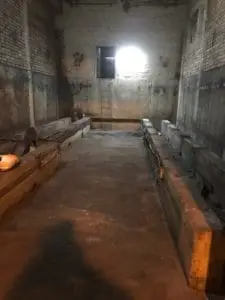
J W Hinchliffe Tanks was appointed to remove six 13,000-litre heating oil tanks from a basement tank room beneath a large city-centre shopping and office complex.
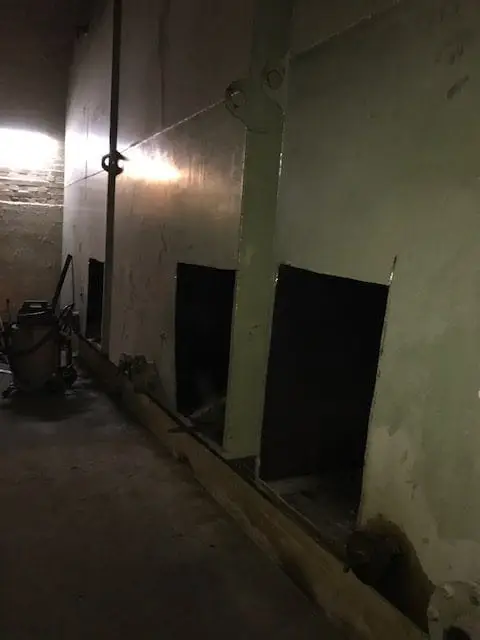
The tanks had previously stored heavy fuel oil and had later been used for gas oil. Although residual fuel had already been drained and access hatches had been cut into the vessels, the tanks had not been cleaned internally.
However, the key challenge was to remove the tanks without allowing smoke or fumes to escape into the occupied retail and office spaces above.
JWH therefore developed a controlled cleaning, extraction and hot-cutting process that allowed the tanks to be dismantled and removed with no recorded smoke escape and no downtime for the surrounding businesses.
Project at a Glance
Client sector: Retail and commercial property
Location: City-centre shopping and office complex
Tank quantity: Six
Tank capacity: 13,000 litres each
Tank location: Basement tank room
Previous fuel: Heavy fuel oil
Later fuel: Gas oil
Key challenge: Preventing smoke and fumes from affecting occupied premises above
Outcome: All six tanks removed with zero downtime for surrounding shops and offices
Services provided:
- site survey and method planning
- internal tank cleaning
- gas-free preparation
- temporary fume extraction
- sealing of the tank room
- hot cutting
- sectional tank removal
- crane-assisted handling
- waste documentation and decommissioning records
The Client’s Requirements
JWH was approached by the principal contractor after another contractor had been dismissed from the project.
The site contained six large tanks in a basement directly beneath occupied retail units and offices. Therefore, the client needed a removal method that would:
- prevent smoke or fumes reaching the premises above
- deal safely with heavy fuel oil residues
- allow hot cutting in a confined basement environment
- minimise disruption to other basement users
- remove the tanks efficiently from a restricted location
- provide a complete waste and decommissioning paper trail
Site and Access Challenges
The tanks were positioned in a basement tank room beneath a busy city-centre complex.
Because offices and shops were immediately above the work area, uncontrolled fumes or smoke could have disrupted businesses or forced parts of the building to close.
In addition, the heavy fuel oil residue inside the tanks created another challenge. Heavy residues are more difficult to remove completely and could have produced smoke during hot cutting if the tanks were not cleaned to a suitable standard first.
Furthermore, access was restricted. JWH therefore had to plan how the dismantled steel sections would move from the tank room to the waiting vehicle.
Preparing the Tanks for Removal
First, JWH cleaned the tanks internally to remove the remaining heavy fuel oil residues.
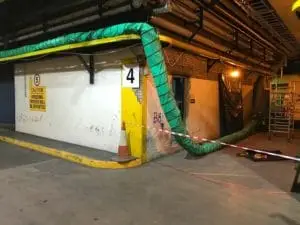
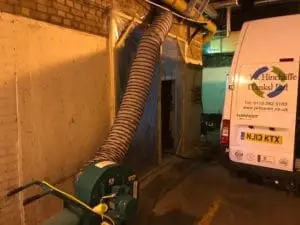
Meanwhile, the team designed a temporary extraction system using the building’s existing basement traffic-fume exhaust system.
Following the initial survey, JWH identified the most suitable extraction point to minimise the effect on other basement users.
Once cleaning was complete, the team confirmed the tanks were gas free before moving to the cutting stage.
This work reflects JWH’s experience in commercial oil and fuel tank cleaning services.
Creating a Controlled Extraction System
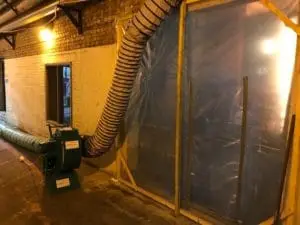
Before hot cutting began, JWH created a temporary enclosure over the main tank-room access door.
The extraction equipment removed fumes from this controlled point, while the team sealed numerous smaller holes in the tank-room wall.
Next, the team opened the rear access door to draw fresh air through the room and towards the extraction point. This created a controlled airflow path through the work area.
Once the extraction arrangements were in place, the team obtained the necessary hot-works permit and began cutting the tanks into manageable sections.
Where flammable liquids and vapours are involved, site controls should reflect relevant HSE DSEAR guidance.
Cutting and Removing the Tanks
Over the following three days, JWH cut all six tanks into sections and removed them from the basement tank room.
Next, JWH divided each tank into manageable pieces so the steel could be handled safely within the restricted space.
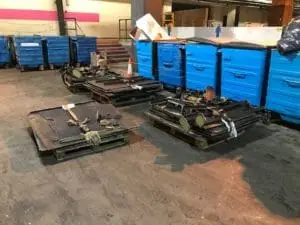
The team then moved the dismantled sections onto pallets and took them from the tank room for loading and disposal.
JWH positioned its lorry-mounted crane in the basement for the duration of the work. This allowed the team to load each section directly as it left the tank room and helped keep the work area clear.
This project demonstrates JWH’s experience in commercial oil and fuel tank removal from difficult and sensitive locations.
Managing Smoke, Fumes and Business Continuity
Controlling smoke and fumes was the central requirement throughout the project.
The combined cleaning, gas-free preparation, temporary enclosure and extraction system allowed JWH to carry out hot cutting without smoke escaping into the occupied areas above.
Importantly, no incidents of smoke escape were recorded during the work.
As a result, the surrounding shops and offices remained operational throughout the removal programme, with zero downtime caused by the tank works.
Waste Handling and Documentation
After removal, JWH provided the client with the relevant waste documentation.
The project records included:
- a hazardous waste consignment note for waste arising from the tank-cleaning process
- a duty of care note for the scrap metal
- a decommissioning certificate for the removed tanks
Together, these documents provided a traceable record of the waste leaving the site.
The Result
JWH successfully removed all six 13,000-litre tanks from the basement without disrupting the retail and office businesses above.
The project delivered:
- safe cleaning and gas-free preparation of six former heavy-fuel-oil tanks
- a purpose-designed fume extraction system
- controlled hot cutting in a sensitive basement location
- efficient removal of dismantled tank sections
- crane-assisted loading from within the basement
- zero recorded smoke escape
- zero downtime for surrounding offices and shops
- full waste and decommissioning documentation
Overall, the project demonstrates the value of careful planning and site-specific controls. These measures allowed JWH to complete complex tank removal work safely in highly constrained and sensitive environments.
Discuss a Sensitive or Restricted Tank Removal
J W Hinchliffe Tanks provides commercial fuel and oil tank removal services throughout the UK, including projects involving basements, confined spaces, restricted access and sensitive occupied sites.
Our team can assess the tank, access arrangements, cleaning requirements, cutting method and lifting strategy before developing a suitable removal plan.
Contact JWH to discuss your tank-removal requirements or request a quotation.